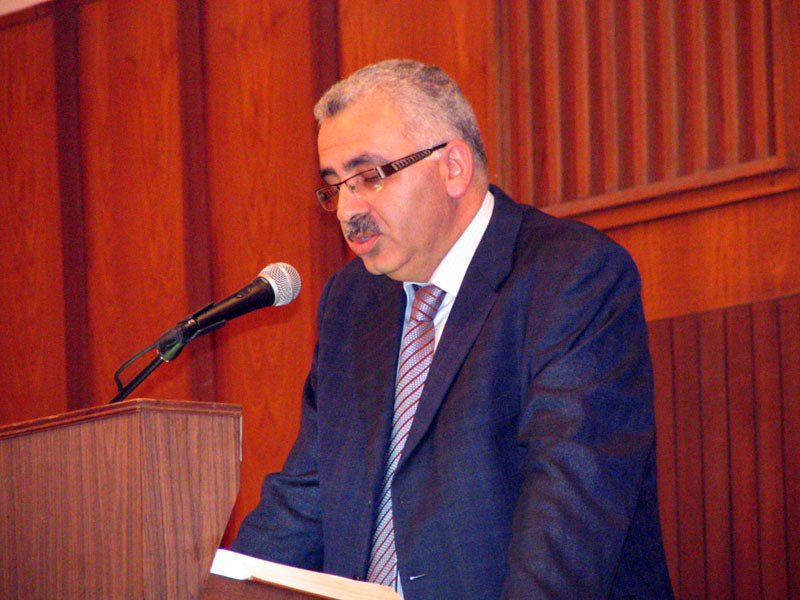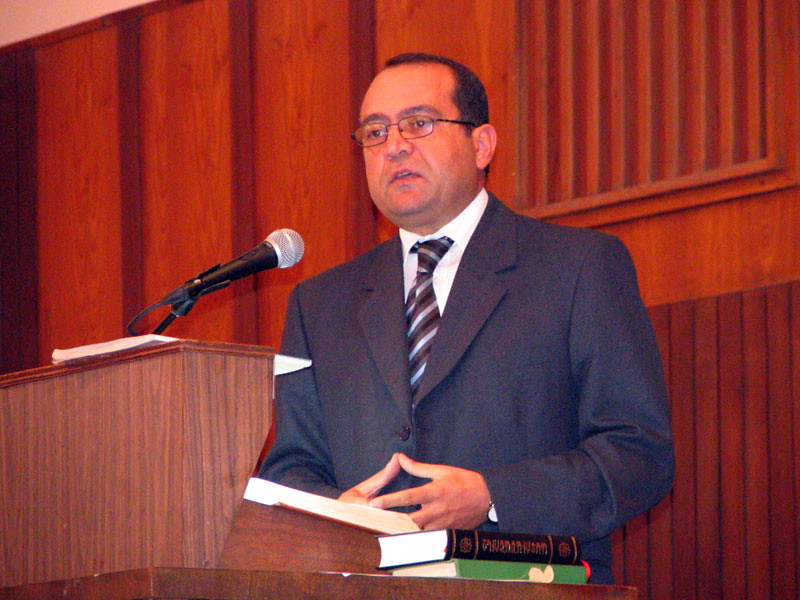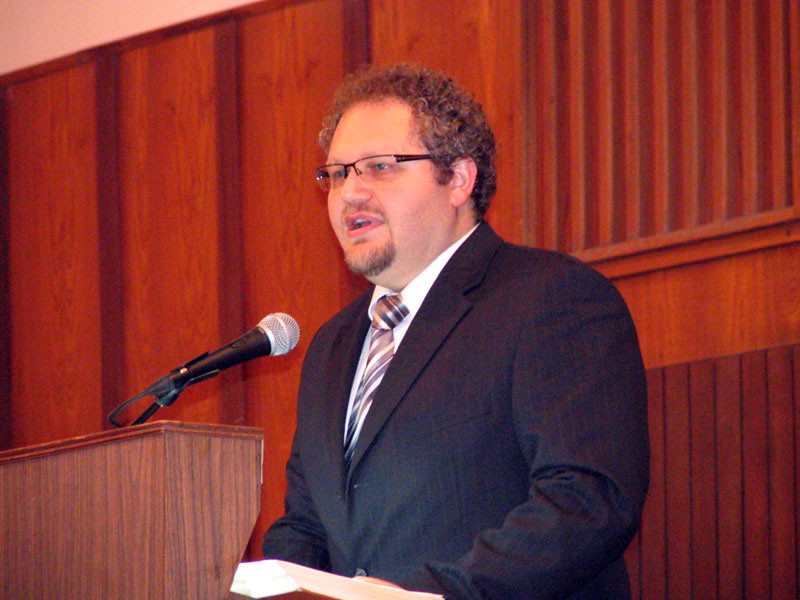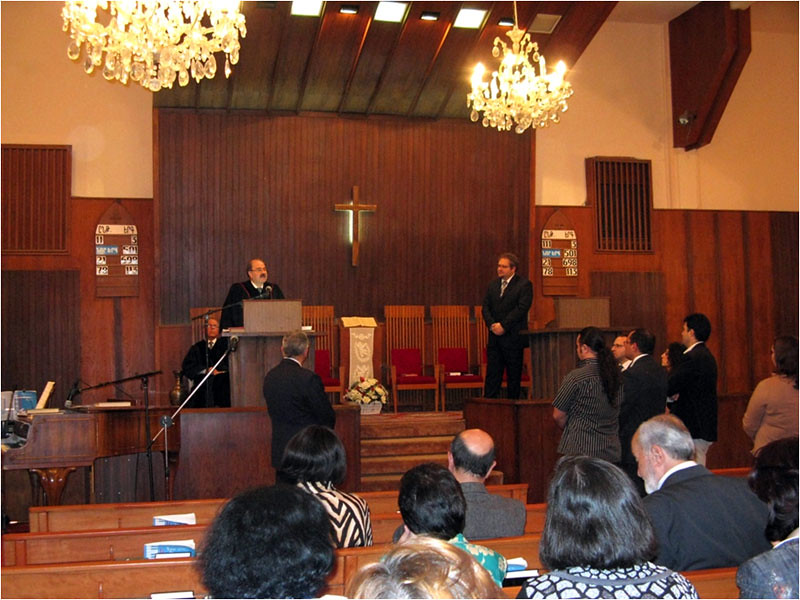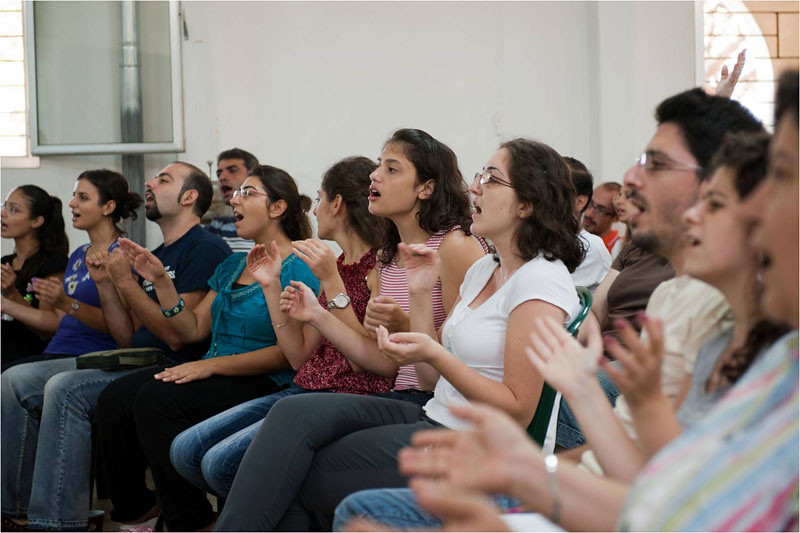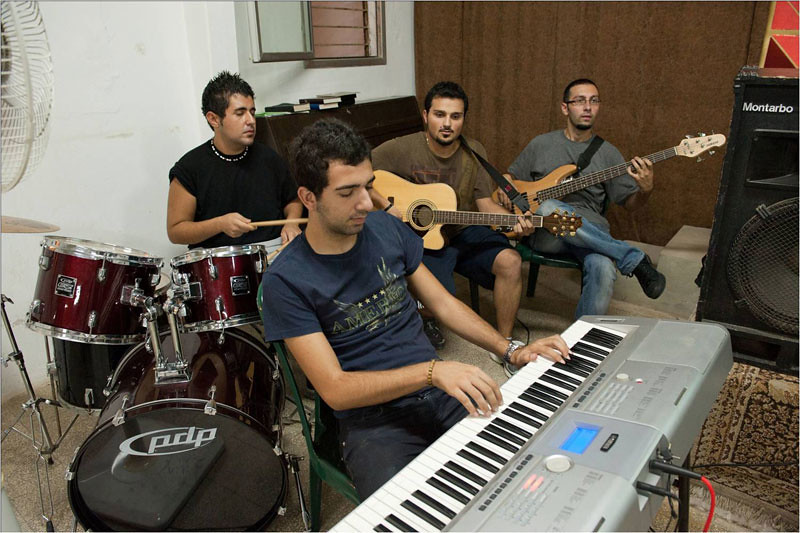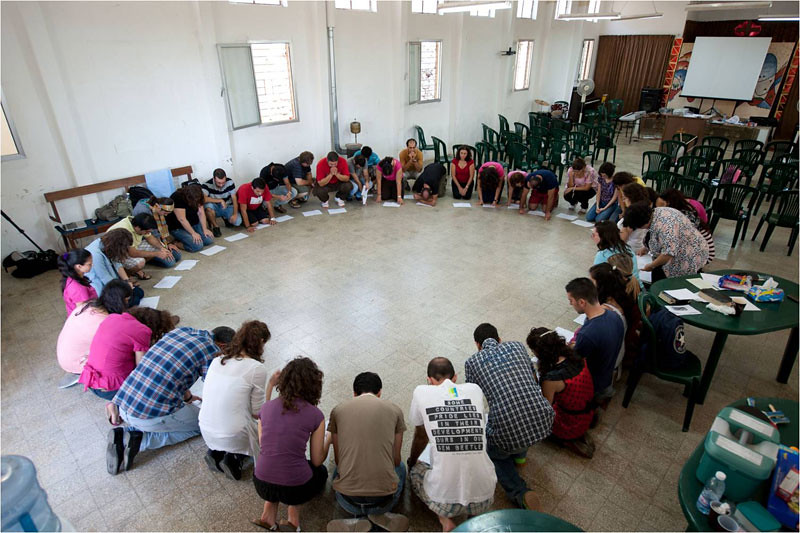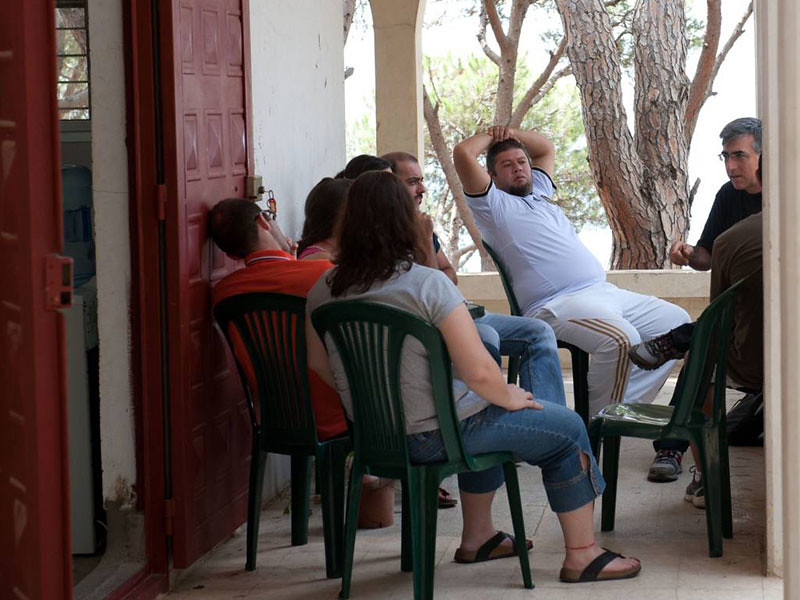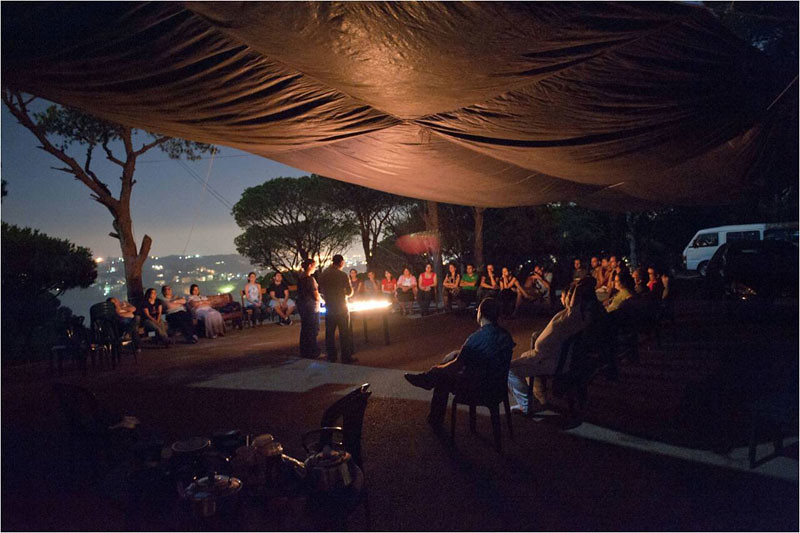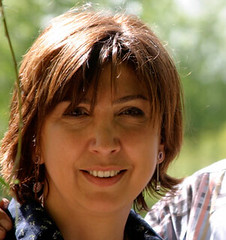

The life and the needs of the youth today have caught the attention of the community in large and are regarded as a priority among the various organizations, the church being an integral part of it. The world sends strong messages to the youth today, luring them into drugs, pornography, sexual promiscuity, ungodliness. The church has to take a stand and keep the fortress strong. In order to reach out to the youth, the Christian Endeavour's Executive Committee of the Armenian Evangelical Churches has requested Badveli Datev Basmajian to become the youth minister. On this occassion, we had an interview with him.
(Interview by Raffi)
(Interview by Raffi)

Raffi - What was your reaction when you first received the request from the CE Union to become the Youth Minister of the Armenian Evangelical Churches in Lebanon?
Datev - When this position was offered to me, I was filled with mixed emotions. Because, on the one hand, I have the passion to minister to the youth, but on the other hand, I also know that it is challenging to work with the youth. I asked God’s guidance in this matter, and gave my positive response to the CE Union who had already done its part in arranging for us to move to Beirut, and be a full time Youth Minister serving the Armenian Evangelical Churches and Schools in Lebanon. I should also mention that, Lebanon used to have a full time Youth Minister a long time ago, but didn’t have the luxury to have a full time Youth Minister for the last two decades, so the members of the Executive Committee did their part to manage the youth ministry on the field. The Youth Societies of the Armenian Churches raised the issue, the need to have a full time Youth Minister. It was obvious that the field needed a dedicated person to minster on a full time basis.
God spoke to me through this need, which is a different form of ministry than being a full time pastor of a church, having in mind that in the end, the reason and the One who calls to ministry is God himself. Ministering to the youth requires a different approach, it is more focused on the youth and their needs, be involved in their daily life, their challenges and relationships. I believe that God has already prepared me, and continues to prepare me, for this mission, and I also believe that God has a lot to do through me, which is a great honor and joy for me to be useful in His hands.
God spoke to me through this need, which is a different form of ministry than being a full time pastor of a church, having in mind that in the end, the reason and the One who calls to ministry is God himself. Ministering to the youth requires a different approach, it is more focused on the youth and their needs, be involved in their daily life, their challenges and relationships. I believe that God has already prepared me, and continues to prepare me, for this mission, and I also believe that God has a lot to do through me, which is a great honor and joy for me to be useful in His hands.
Raffi - Can you tell us what your ministry will entail, and the fields you will be responsible for?
Datev - The ministry will be on different levels:
- On the personal level, I will be meeting with the youth and teenagers to guide them to Jesus Christ and encourage them to follow Him, having in mind the needs of today’s youth.
- On a group level, I will be forming a Core Group of young people who are already committed and have leadership positions but have less time to take care of their own spiritual intake, and will be meeting with them on a monthly basis to have some time of worship and prayer, encouragement and guidance.
- Committees: I will be forming a Joint Teenagers Committee, and a Joint Youth committee that will be planning joint events targeting different occasions on the Armenian and the Christian calendar, whether spiritual, social, or an Armenian cultural event.
- Training: I will be planning leadership training seminars or retreats for our leaders who serve the teenagers and the youth, and also be preparing new leaders who have the potential to serve.
- Recourses: I will be providing resources and materials that are up-to-date and that help the leaders to be prepared.
- Schools: I will be visiting the Armenian Evangelical Schools, doing chapels, and preparing school activities with the leaders of the teens.
- Website: or a Facebook page for the Teens and for the Youth and update it, mentioning new events and posting pictures or giving reports of the past events.
- Camps: I will be planning and executing the Summer Camps, Teens and the Youth.
- On the personal level, I will be meeting with the youth and teenagers to guide them to Jesus Christ and encourage them to follow Him, having in mind the needs of today’s youth.
- On a group level, I will be forming a Core Group of young people who are already committed and have leadership positions but have less time to take care of their own spiritual intake, and will be meeting with them on a monthly basis to have some time of worship and prayer, encouragement and guidance.
- Committees: I will be forming a Joint Teenagers Committee, and a Joint Youth committee that will be planning joint events targeting different occasions on the Armenian and the Christian calendar, whether spiritual, social, or an Armenian cultural event.
- Training: I will be planning leadership training seminars or retreats for our leaders who serve the teenagers and the youth, and also be preparing new leaders who have the potential to serve.
- Recourses: I will be providing resources and materials that are up-to-date and that help the leaders to be prepared.
- Schools: I will be visiting the Armenian Evangelical Schools, doing chapels, and preparing school activities with the leaders of the teens.
- Website: or a Facebook page for the Teens and for the Youth and update it, mentioning new events and posting pictures or giving reports of the past events.
- Camps: I will be planning and executing the Summer Camps, Teens and the Youth.
Raffi - What are the issues that the youth in our churches face today? How can they overcome these issues?
Datev - Due to globalization, rich diverse culture, and dissimilar concerns, the attention of the youth gradually has started drifting away from the church. Having this in mind, we need to admit that the church cannot compete with the world and its progression. This doesn’t mean that it’s a lost cause, and that the church cannot have an effective ministry with the youth. We have another factor that can be offered to the youth, which is to show genuine and personal interest, counsel, acceptance and love.
What the young people need today is first, adult spiritual guidance, not in a traditional way, but in a way that can connect to the youth today. Second, role models that will help them create proper awareness in life in general and in spiritual life in specific. This will give the courage for the youth to tackle the issue of being indifferent, which is the key to becoming a healthy member of the society, and the church. We need to support the youth to create healthy relationships, be interested in education and career forming, and be aware of decent courtship (healthy girlfriend-boyfriend relationships) which will lead them to healthy marriages; therefore, we will have a well-functioning society. The world tries to bring change from the outside, which is why the appearance is the most important aspect; whereas God brings change from the inside out, which is why the heart and the soul of a person matter most for Him. As the body of Christ, we are called to be imitators of God.
The challenge for the body of Christ is to show love and acceptance to the young generation, and the challenge for the young generation is to acknowledge and accept the love offered by God, through His people.
What the young people need today is first, adult spiritual guidance, not in a traditional way, but in a way that can connect to the youth today. Second, role models that will help them create proper awareness in life in general and in spiritual life in specific. This will give the courage for the youth to tackle the issue of being indifferent, which is the key to becoming a healthy member of the society, and the church. We need to support the youth to create healthy relationships, be interested in education and career forming, and be aware of decent courtship (healthy girlfriend-boyfriend relationships) which will lead them to healthy marriages; therefore, we will have a well-functioning society. The world tries to bring change from the outside, which is why the appearance is the most important aspect; whereas God brings change from the inside out, which is why the heart and the soul of a person matter most for Him. As the body of Christ, we are called to be imitators of God.
The challenge for the body of Christ is to show love and acceptance to the young generation, and the challenge for the young generation is to acknowledge and accept the love offered by God, through His people.
Raffi - What are the short term plans?
Datev - The short term plans would be the ongoing plans, which are the same points I mentioned in answering question #2.
Raffi - What are the long term plans?
Datev - There are a lot of ideas for the future of this ministry, having a Youth Center where volunteers can come and hang out with, direct, counsel and provide a healthy resourceful environment to the youth of that specific area. But in general, long term plans or goals would be directed towards the endeavor of investing much time and effort on preparing leaders/disciples for God and His kingdom. After all, we are called to be faithful to the Great Commission written in Matthew 28:19 “Go therefore and make disciples of all nations…”
In the end, I would like to state that I believe in Jesus and His promise, He promised to be with us always. He gives me the greatest support I need. Other than that, I will need the cooperation of the leadership and the youth who I am working with, so that the Youth Ministry grows. And as for me, I need is to be faithful to His call and mission; keeping the Christian Endeavor motto in mind; serving Christ and His Church.
In the end, I would like to state that I believe in Jesus and His promise, He promised to be with us always. He gives me the greatest support I need. Other than that, I will need the cooperation of the leadership and the youth who I am working with, so that the Youth Ministry grows. And as for me, I need is to be faithful to His call and mission; keeping the Christian Endeavor motto in mind; serving Christ and His Church.