
An Interview with Rev. Hovhannes G. Svadjian, about the Art Exhibition That Was Organized for the First Time

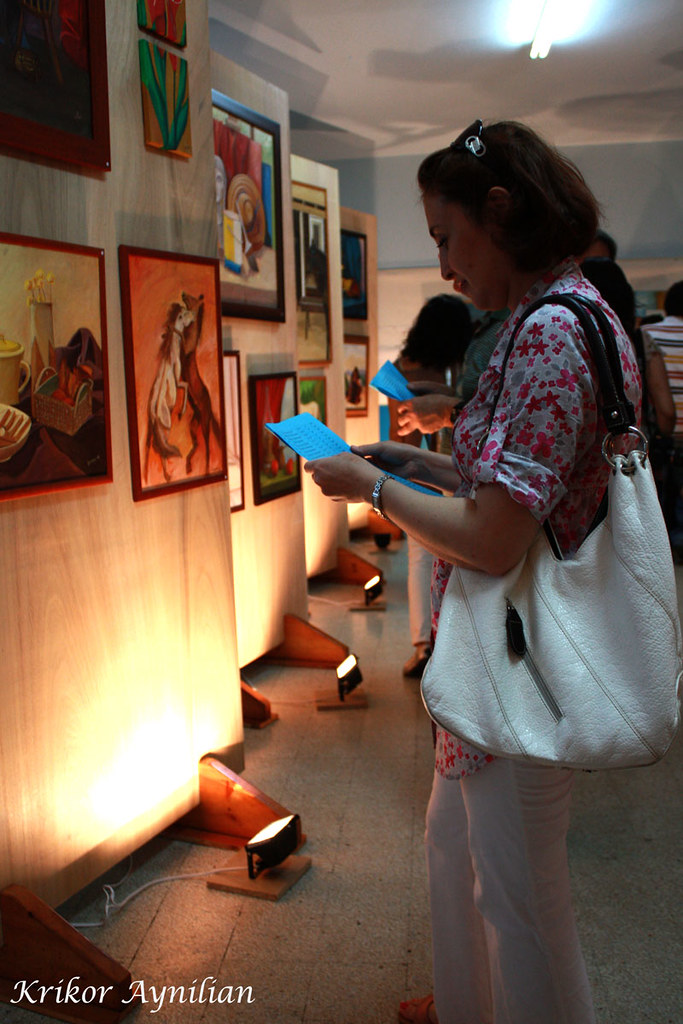
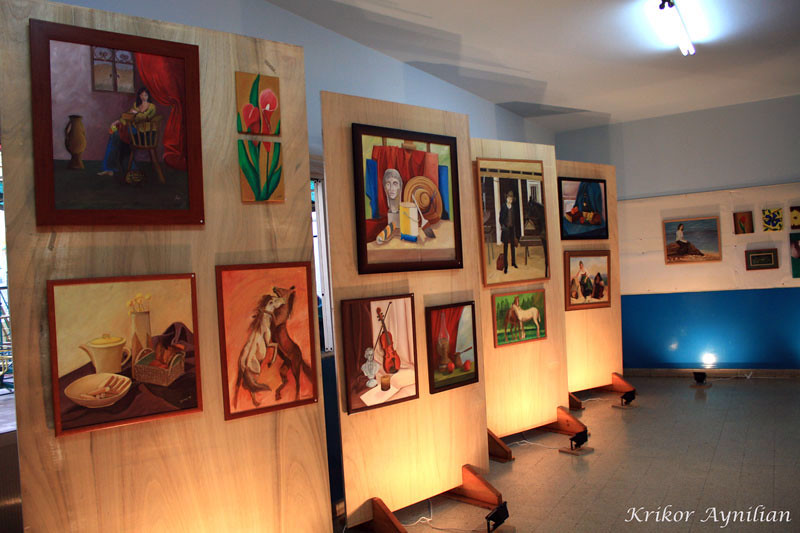
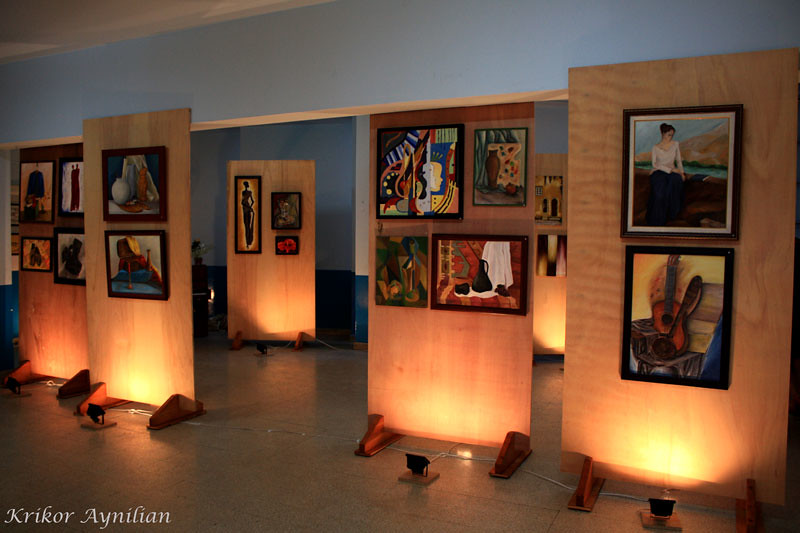
From 24 June to 29 June, 2010, the Armenian Evangelical Emmanuel Church planned and organized an Art Exhibition for the first time in its history. On this occasion, we had an interview with Rev. Hovhannes Svadjian, the pastor of the church, to provide us with the details of the exhibition and its effect on the youth.
(Interview by Raffi)


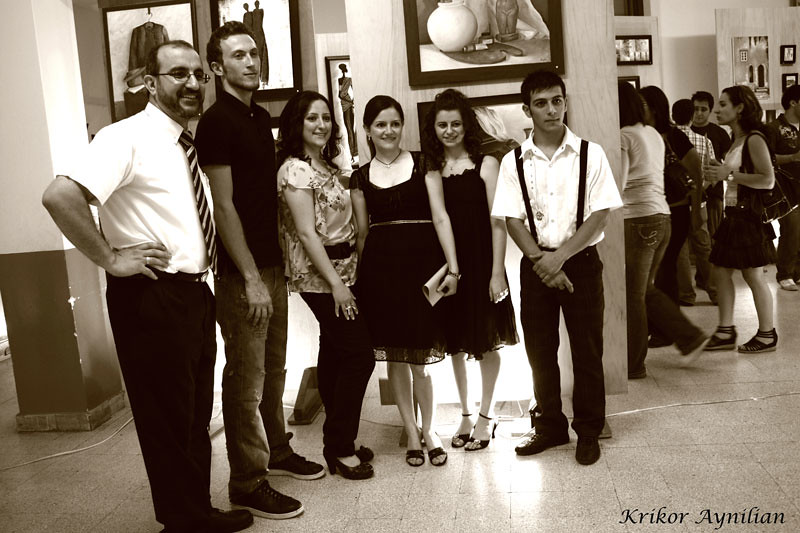
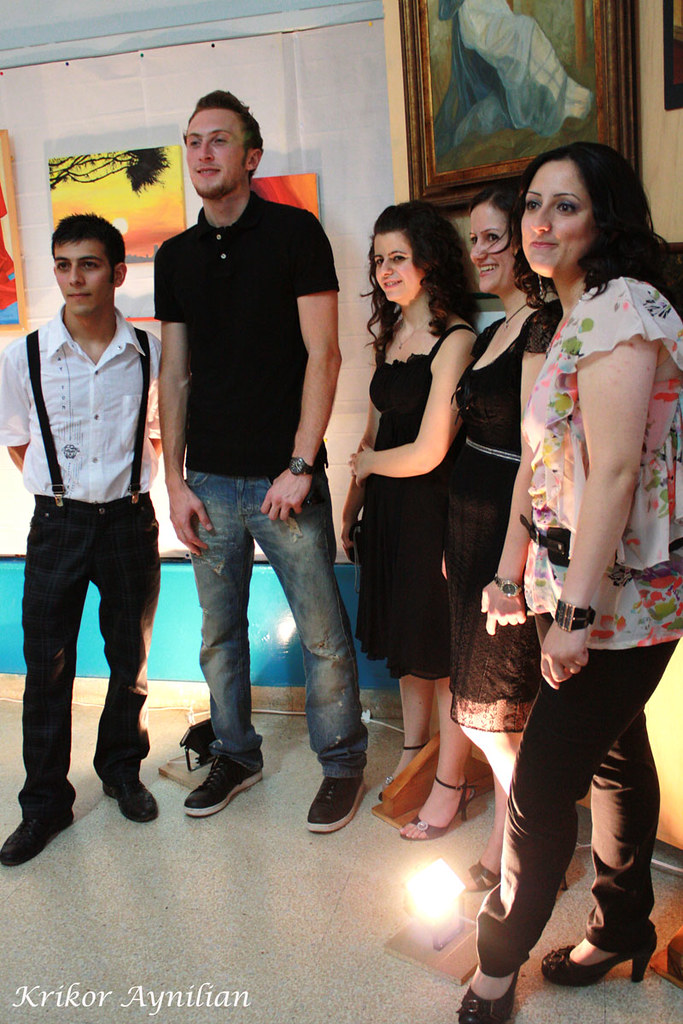
(L to R): Rev. Hovhannes Svadjian, Shant Aynilian, Maria Dekermenjian, Ani Dekermenjian, Dzovag Demirjian, Koko Avessian, Kohar Parseghian (photoshy)

Raffi - Can you tell us how the Armenian Evangelical Emmanuel Church made the decision to organize a painting exhibition?
Rev. Hovhannes - The Armenian Evangelical Emmanuel Church in Dora, Beirut, launched an Art Exhibition, as a part of her mission, in a series of activities occurring in the years 2009 and 2010. The daily topics and concerns of our financial problems, electricity, water or inflation and the economic and political crisis, all consume our abilities and drain us spiritually. In these depressing atmosphere and unhealthy times, we believe that the Church has the role to inspire hope and offer the Good News of Jesus Christ to the people around her. The launching of the Art Exhibition was an attempt to see other dimensions in our lives, discuss about it and see God’s work through the talents of young men and women.
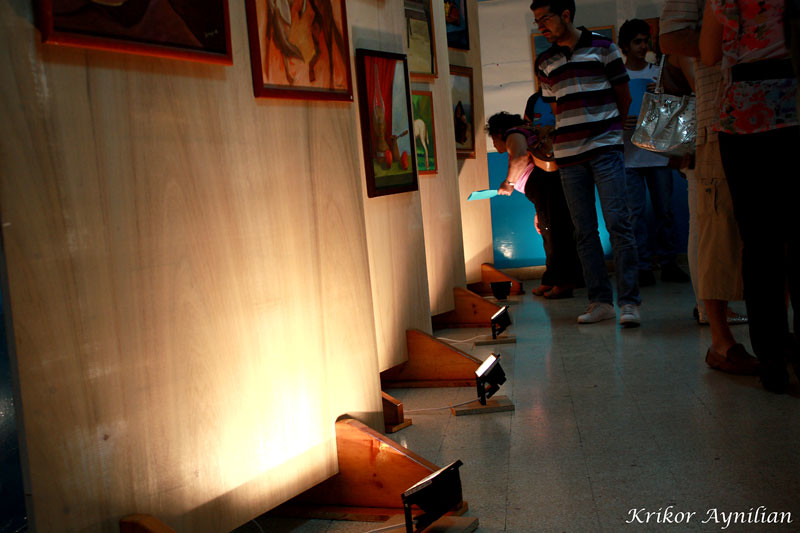
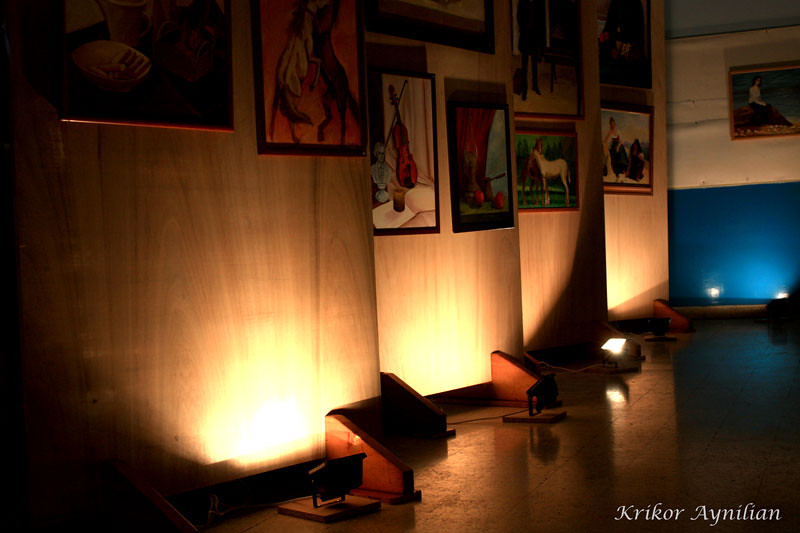
With these concerns, the Art Exhibition was held from Thursday, 24 June till Tuesday, 29 June, 2010, from 5.00 till 9.00 pm, in the Kindergarten Hall of the Armenian Evangelical Torossian School.
It took us months to prepare for this exhibition. After the decision was made in the Church Committee, the idea was conveyed to the six participating artists. After their consent, the Church searched for possible resources. With God’s help, we found our benefactor, for whom we express our gratitude to God. Through his generous aid, the whole project was covered and was successfully launched.

Raffi - Who were the young artists, and can you tell us more about their talent and education?
Rev. Hovhannes - The young men and women, who participated in this Art Exhibition are members of the youth group of the Armenian Evangelical Emmanuel Church. Some of them are trained painters, who have attended art schools or have followed art courses. Others have it as a hobby. Most of them have or on the way of having their Bachelor Degree in Education, in English or Architecture. Here, these artists participated with their 80 art works, representing different schools of thought. The six dynamic artist-painters were: Maria Degirmenjian, Ani Degirmenjian, Shant Aynilian, Koko Avesian, Dzovag Demirjian and Kohar Parseghian.

Raffi - What was the feedback of the people, who came and saw the works of the young talents?
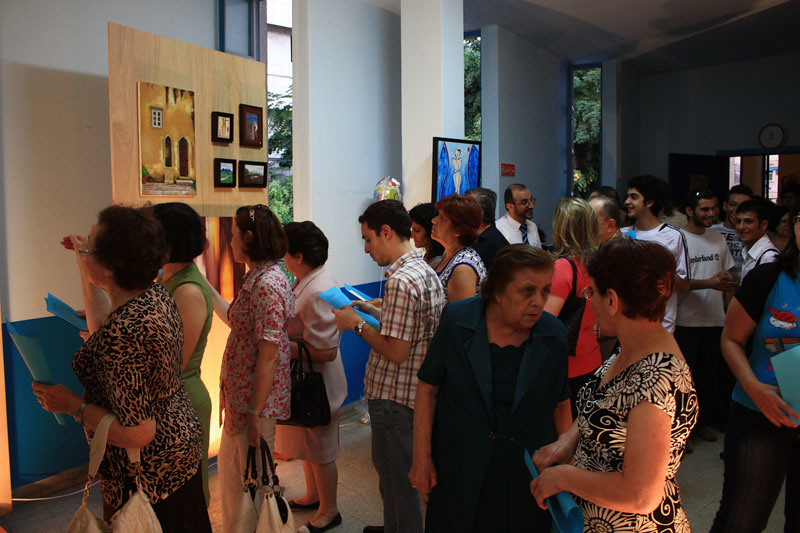
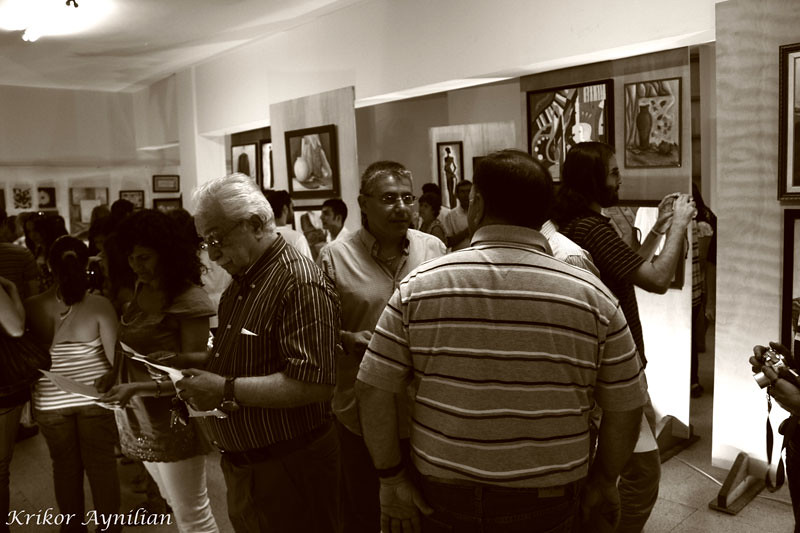
Rev. Hovhannes - The climax of this whole Art Exhibition event was the opening, where many Church members, artists, friends and invitees were present. On Thursday, 24 June, more than 100 people were present for the opening, in order to encourage and support the whole painters. Usually the general response of the people was very positive, because this was the first time that such an exhibition was launched in our campus and with our own talents. Unfortunately, the following days had a very shy presence. Over all 10 art pieces were sold in those 6 days. However, the whole project was an attempt on the part of the Church to convey to the people to enlarge her horizons and to be circumspect, in order to see other topics for discussion and other issues of concerns.

Raffi - What were the reactions of the young artists, after the exhibition days?
Rev. Hovhannes - During preparation of the Art Exhibition and after it was over, the response of the artist-painters was and is very positive. Their enthusiasm spoke louder than words. They were present during the discussions, when preparing the Hall and during the exhibition. They were present to supervise, to explain and to discuss their art works with the visitors. Their spirit of gratitude is seen till this day.

Raffi - Any future plans?
Rev. Hovhannes - We believe that the Church has a role to play and a mission to pursue. The Armenian Evangelical Emmanuel Church is no exception. We have some preliminary thoughts but it needs to be clarified, discussed and pursued by the Church. By time, they will be crystallized and implemented. We appreciate all the voluntary works done during the Art Exhibition by the members of the planning committee and by different individuals. We thank God for the talents in our midst. We hope and pray that the artist-painters use their talents for God’s glory.
The Essence of Service

A while ago, a good friend of mine wrote [Տաքցուր, Փակցուր] that today’s Spiritual service leaders are not as competent as they should be, he also stated that there are some teachers in Sunday schools who don’t know how many books there are in the Bible; thus worried that his children would be misled, he preferred that if he had any children he would not send them to such a community. That sentence, on its own, infuriated me since being a Sunday school teacher myself, I don’t know how many books there are in the Bible!

Today, I wanted to write this article because I wanted to remind people that service was never about mathematics, never about laws, and never about numbers: How many books are there in the Bible? How many chapters does the Psalm have? Or how many years have you served in a certain group? I wanted to remind people that the essence of service is the Grace of God and the Guidance of the Holy Spirit. The Bible clearly stated its opinion about law and grace, Romans 8:3 states “for what the law was powerless to do God did by sending his own son”. As for the concept of service, it is saying thank you God for everything you have blessed me with and now I will try to show my appreciation to you through my work and my deeds as much as I can.

I don’t want you to misunderstand me; I am certainly not saying that knowledge is unimportant. Quite the opposite it is very basic, but no one was born with the ultimate knowledge, we all learn through experience, time, and dedication. It is true, some of the leaders do miss some of the traits of leadership, but then again, no one is perfect. And for those people who have learned the mathematics and laws of the Bible, I call upon them, and I ask them one simple question:

Where are you?

As for my friend and I, don’t worry, we talked, discussed, argued and realized that we both were protecting the same cause. We both were worried about our Spiritual community and we were hungry to see it prosper and grow. And those of you who send your children to Sunday school, don’t worry, we know what we are doing, we always come prepared and most importantly we are always guided by the Holy Spirit; since besides the personal and group effort we bring together as a group, we also believe in the power of our prayers.

Thank you.

Aline Tahazian
Aline Tahazian

Dr. Ari Topouzkhanian Lectures About the Computerized Bible in the Armenian Evangelical Emmanuel Church

On Thursday, 9 Dec. 2010, organized by the Union of the Armenian Evangelical Churches in the Near East, a lecture was held in the Armenian Evangelical Emmanuel Church, by Dr. Ari Topouzkhanian, about the Computerized Bible.

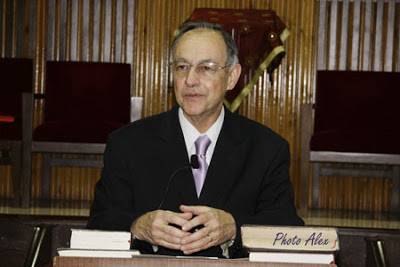
Rev. Soghomon Kilaghbian welcomed everyone and presented the lecturer, who comes from France, and is the honorary editor of Panper, and member of the L'espoir Armenie, which sends aid to 500 children in Armnenia. Rev. Soghomon added that today is the age of computers, and that we should introduce the Bible to the new generation, using the computers, trasferring Christian education.

Afterwards, Dr. Topouzkhanian presented about the latest Armenian Bible that was published in 2001. He mentioned that the Bible should be republished, because the language changes with time.
He then introduced the software that contains the Bible in eight different languages. Also, the Armenian Concordance that was added into the software application.

What Do I Look For In A Christian?

One of the temptations we all experience is thinking of church growth with secular standards. If we have a big number of attendees at an event, or an event doesn’t cost much to the church, we consider it a success. We sometimes think the same way about people. If people aren’t  accomplishing great things, or making great achievements, we consider them failures.

We had Rally Sunday on September 12, 2010 to start the church year. Are some of us looking for  “successful” events and great faith heroes? What should we look for in people? After the stoning of Stephen, the church was explicitly persecuted and scattered. Saul was one of the most powerful persecutors of the followers of Christ until the Lord revealed Himself on the way to Damascus, and he repented and became a dynamic preacher of the Gospel of the Good News of Jesus Christ. When God led him to return to join the disciples, he obeyed, came to Jerusalem and tried to join the church. But the disciples were not ready to try to see the new person in Saul, because they were afraid.

But here comes Barnabas with a very crucial role to play: Introduce the Christian Saul to the apostles, convincing them that the Lord has changed that vicious and furious man to a humble and serving follower of Him. Barnabas is not presented to us as a great preacher like Paul or Peter or Timothy. But Barnabas did encourage Saul and the disciples. He lifted them up and the church started to grow very rapidly.

There are just a few sentences about Barnabas in the New Testament. The best description of him is found in Acts 11:24 – He was a good man, full of the Holy Spirit and faith.

We know from our Lord’s teaching that God alone is good, as He said to the young ruler: Why do you call Me good? Only God is good, meaning only God is perfect. I don’t think Barnabas was a perfect or sinless person, but I believe he lived his life according to Biblically moral and ethical standards, full of the Holy Spirit, bearing the fruits of the Spirit which are listed in Galatians 5 in such an obvious way that the Bible describes him as a good man. We don’t need to try to be Paul or Timothy. If God gives us that gift and blesses us, that’s great. But the reality is that God gives each one of us a different gift. Barnabas had the gift to encourage people and he did so wonderfully. What’s your gift? How do you want to use it?

We are looking for people to acknowledge God-given gifts and be willing to use them joyfully for His glory.

Rev. Mgrdich Melkonian,
Senior Pastor, First Armenian Presbyterian Church
Fresno, CA, USA