Edinburgh 2010: How do young people get involved?
Below is an article by a young Christian from South Africa. She was one of the fortunate few young men and women who participated at the Edinburgh 2010 World Mission Conference. She exemplifies the voice of the youth who live in developing countries.
By Fofo Lerefolo
It’s been 100 years since delegates met in Edinburgh to discuss the state of world missions, and many momentous, world-changing decisions were made. I sit now, a young South African, in 2010, part of the centenary celebrations. My presence here shows just how much the times have changed. In 1910, a mostly male, all-Western, all-adult delegation met. I represent the opposite of all that – young, female and African. But I have to ask myself, what does this conference mean: for me personally; for the youth I represent; for the country I am from?
Mission is no longer an activity solely of the West – young Christian South Africans are as able to go into all nations and make disciples as any other. Africa is no longer a dark continent. The gospel and light of Jesus shines strong here. And it shines out of the youth. It’s time we mobilised and released our young people into mission, instead of only being a nation that receives missionaries. Edinburgh 2010 should not only be a meeting of minds, of discussions and academia. It needs to be a springboard, a reminder that all Christians everywhere carry the light of Jesus and can go into all the world, and that young South Africans (and indeed young people the world over) are a powerful missionary force.
This is a challenge and proactive look at how youth can do effective mission both within and beyond the church walls. There are shortcuts in youth ministry but there is an amazing truth in work alongside. How can the youth of today be missionaries and make our voice heard in issues that affect us everyday socially, politically, economically, socially and ecumenically?
Christian mission of youth is rarely recognised and this discourages us so we end up walking away from church or sit at the back. We deserve a platform, and to make our own statements in the issues of mission, unity, justice and peace. According to Kirk Sandvig, the Youth coordinator of the Edinburgh 2010 Mission, “most discussions of mission have tended to be dominated by more experienced and accomplished missiologists that we all know and respect. This perceived dominance has unfortunately created reluctance among many young missionaries and missiologists to freely express their thoughts on Christian witness. While many people have written about the role of the youth within the church, very little has been written from the perspective of youth”.
I believe mission can be done in many ways and different contexts by engaging in issues that affects us as both the youth of the world and the church, issues such as HIV/Aids, unemployment, drugs and substance abuse, child abuse and racism. Coming from a country which struggled because of apartheid, integration is still a challenge especially to those who faced the era but it’s a bit trouble-free to those who were born post 1994, after the democratic South Africa. Those can be used as a tool of mission to fight for integration and be one church.
Fofo Lerefolo, originally from South Africa, is a proud Methodist and active member of youth organizations in the Methodist Church of Southern Africa. She is currently working as an intern with the World Council of Churches in the Mission and Evangelism programme.
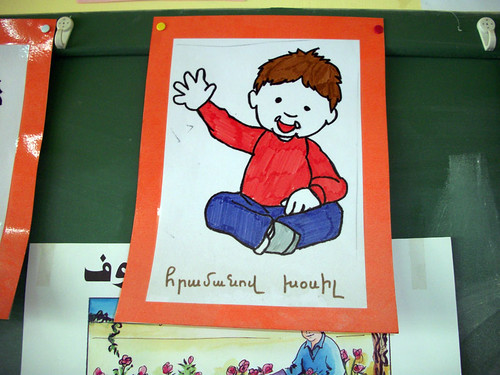
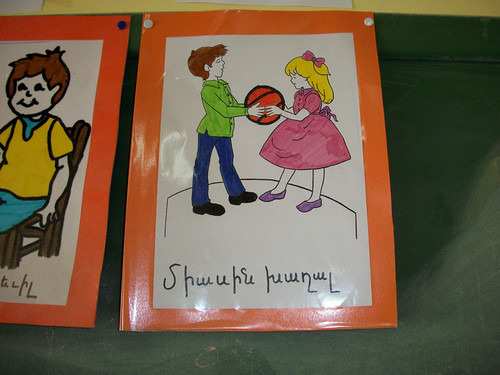
Ինչ որ Կ՛ընես Հիմա Ըրէ (Whatever You Do, Do it Now)
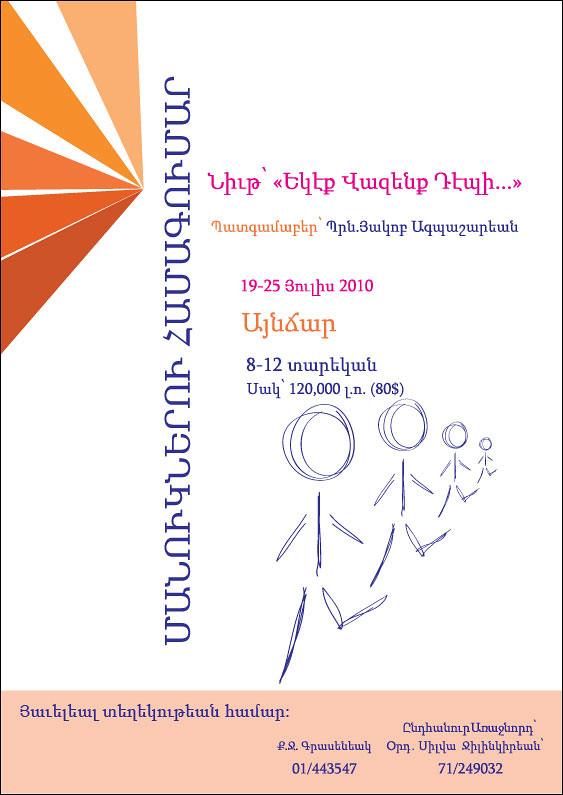
Announcement: Annual Children's Camp in Anjar
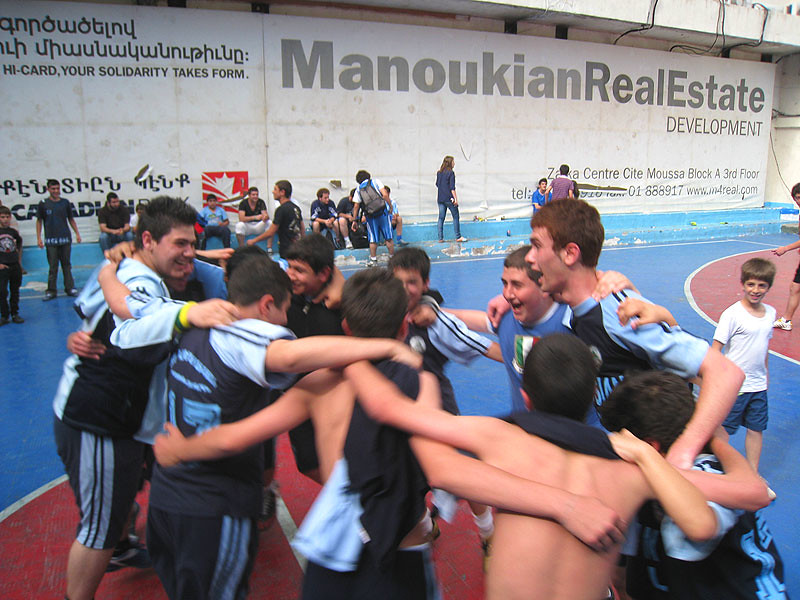
The Defending Champions Did It Again!
The final match was tense. Our defending champions, the soccer team of the Armenian Evangelical P. & E. Torosian School faced a tough opponent - the Djemarantsiner, at the finals of the LEVAM tournament. The LEVAM tournament being an inter-Armenian schools' sports competition, is held every year.
Having an easy lead in the first half of the game, the Djemarantsiner were able to make a striking come back that shocked us all. Our key players were heavily exhausted and were barely able to stop the opponents in the second half. We all thought that we would lose the championship, however, coach Mike Hagopian's persistent efforts came to fruition, when were able to score two important goals and win the championship for the second year in a row.

Having an easy lead in the first half of the game, the Djemarantsiner were able to make a striking come back that shocked us all. Our key players were heavily exhausted and were barely able to stop the opponents in the second half. We all thought that we would lose the championship, however, coach Mike Hagopian's persistent efforts came to fruition, when were able to score two important goals and win the championship for the second year in a row.

New Disciplinary Management System Being Implemented in the Armenian Evangelical P. & E. Torosian School
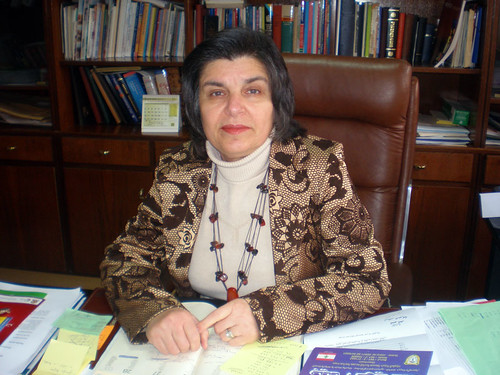
An interview with Mrs. Seta Karagoezian, the principal of the Armenian Evangelical P. & E. Torosian School. The interview is conducted by Mr. Raffi Chilingirian, the Editor in Chief of www.chanitz.org.

RC - Can you tell us about the new system that you started implementing during the start of the 2009-2010 academic year in the Armenian Evangelical P. & E. Torosian School?
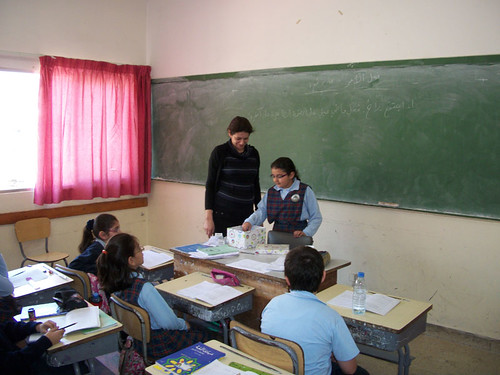
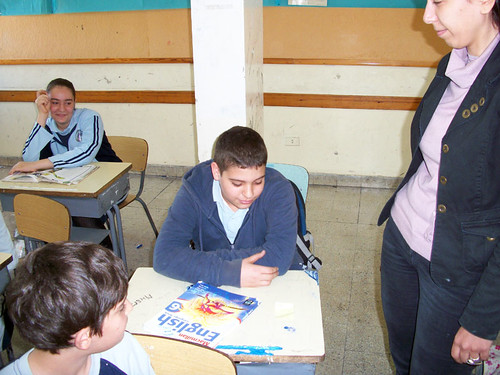
SK - Arm. Evang. Torosian School implemented a new system at the current academic year 2009-2010, in the KG & Elementary classes.
The system is a disciplinary one & helps improve class management.
The aim of it is to have a positive inforcement on students & at the same time educate them to be responsible for their behaviour.
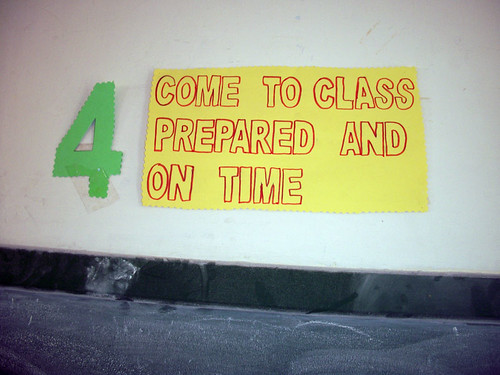
The system has it's rules which are made clear to students in each class at the beginning of the school year, Then they're posted in each class clearly.
The system deals with both positive & negative behaviour.
In class, any positive act or an acheivement ( not necessarily a high grade) of a student is rewarded by a gift from the surprise - box.
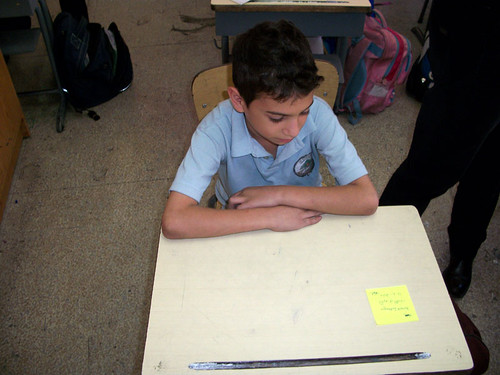
On the other hand if a student breaks a rule , the teacher reminds him twice orally. If the student continues to do so , the teacher sticks a paper on his desk as a close reminder. If he still goes on , he bears the consequence.
In this way the student becomes responsible to control himself with the help of the teacher, hence concentrates on his duties.
RC - Why did you choose to implement this system?
SK - Class management & class discipline are the pillars of group education.
In the new generation , active & hyper-active students are increasing in number. In a group of 25 or more they make a great difference in the class management.
The aim of establishing such a system is having a uniformity in all classes with a positive approach. And educating the children to be responsible for their behaviour was the compulsory force to implement the above system.
Teachers attended 2 one-day workshops to study & master this system & then implement it in their classes.
RC - What are the initial results of this system on the students and on the teachers?
SK - Having evaluated the system after 2 months, revealed that in most of the classes teachers were happy. Their tension & anger was decreased.
Students disciplined themselves just to get a gift from the surprise-box.
Surprise-box worked wonders in some cases.
Few students though had to bear the consequences.
RC - What do the parents think about this new system?
SK - At the beginning of the year, parents were informed of the new system. They expressed their gratitude.
Some of them cooperated very effectively & the results were obviously very positive on their children. Others who couldn't cooperate got a lesser share of benefit.


Photos provided by Mr. Manoug Ibitian

RC - Can you tell us about the new system that you started implementing during the start of the 2009-2010 academic year in the Armenian Evangelical P. & E. Torosian School?
SK - Arm. Evang. Torosian School implemented a new system at the current academic year 2009-2010, in the KG & Elementary classes.
The system is a disciplinary one & helps improve class management.
The aim of it is to have a positive inforcement on students & at the same time educate them to be responsible for their behaviour.
The system has it's rules which are made clear to students in each class at the beginning of the school year, Then they're posted in each class clearly.
The system deals with both positive & negative behaviour.
In class, any positive act or an acheivement ( not necessarily a high grade) of a student is rewarded by a gift from the surprise - box.
On the other hand if a student breaks a rule , the teacher reminds him twice orally. If the student continues to do so , the teacher sticks a paper on his desk as a close reminder. If he still goes on , he bears the consequence.
In this way the student becomes responsible to control himself with the help of the teacher, hence concentrates on his duties.
RC - Why did you choose to implement this system?
SK - Class management & class discipline are the pillars of group education.
In the new generation , active & hyper-active students are increasing in number. In a group of 25 or more they make a great difference in the class management.
The aim of establishing such a system is having a uniformity in all classes with a positive approach. And educating the children to be responsible for their behaviour was the compulsory force to implement the above system.
Teachers attended 2 one-day workshops to study & master this system & then implement it in their classes.
RC - What are the initial results of this system on the students and on the teachers?
SK - Having evaluated the system after 2 months, revealed that in most of the classes teachers were happy. Their tension & anger was decreased.
Students disciplined themselves just to get a gift from the surprise-box.
Surprise-box worked wonders in some cases.
Few students though had to bear the consequences.
RC - What do the parents think about this new system?
SK - At the beginning of the year, parents were informed of the new system. They expressed their gratitude.
Some of them cooperated very effectively & the results were obviously very positive on their children. Others who couldn't cooperate got a lesser share of benefit.


Photos provided by Mr. Manoug Ibitian
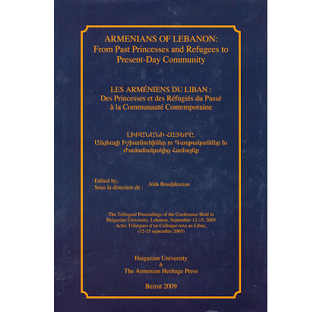
Haigazian University Book launch: “Armenians of Lebanon: From Past Princesses and Refugees to Present-Day Community"
Boudjikanian: This book should be available in each Lebanese-Armenian home and in each Diasporan Armenian home, if not in Armenia.
Beirut, April 20, 2010 – On April 9, 2010, a new book entitled Armenians of Lebanon: From Past Princesses and Refugees to Present-Day Community was launched at Haigazian University.
The book contains the proceeding of the multidisciplinary conference "Armenians of Lebanon: Their Past and Present”, held in September 2005, on the occasion of the University’s 50th Anniversary.
The event kicked off amidst a capacity audience, including Minister of State Jean Oghasabian, MPs Hagop Pakradouni, Farid El Khazen and Arthur Nazarian, Bishop Kegham Khatcherian, Rev. Soghomon Kilaghbian, Board members, faculty, staff, alumni, friends and students.
The event began with a short introduction delivered by the Master of Ceremonies, Mr. Patrick Farajian who stressed on the importance of the work as a research material. He concluded by highly evaluating the mutual “gifts” that Armenians and Lebanon have given each other.
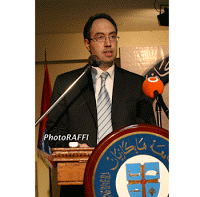
Boudjikanian then proceeded to give her audience a brief glimpse into the content of the book and its fourteen chapters, as diverse in topics as the languages they were written in. She asserted that contributions were kept in their original language, whether it be English, French or Armenian, covering topics ranging from the “Armenians’ well entrenched self-employment in Lebanon” to the “centrality of Lebanon in the Armenian Diaspora.”
She concluded with the hope that this book will show the younger generations “how their grandfathers and great-grandfathers were capable of building this community after 1920 and having their own resurrection.”
Next to speak was Member of Parliament Dr. Farid El Khazen, who celebrated the book as the fruit of Haigazian University’s 50th anniversary conference and expressed his earnest desire that this book be read by both Armenians and Non-Armenians.
In addition to his perspective on the book, he also expanded on the “three broad dimensions of Armenians in Lebanon.” Khazen stressed on the transition of Armenians from refugees to integrated members of Lebanese society, as well as the restructuring of the Armenian political sphere in post-war Lebanon, and finally, the fact that Lebanon is the most prolific in producing Armenian books in the context of the Diaspora after Armenia itself.
After urging that more research needs to be done on the evolution of Armenian institutions in Lebanon, Khazen brought his speech to a close.
This was followed by a short musical interlude, with Shushan Artinian on the cello and Maria Palazian on the piano, beautifully performing “Oror” by Parsegh Ganatchian.
University President, Rev. Dr. Paul Haidostian addressed the audience with words of appreciation for everyone involved in the process of creating this book, including the co-publisher, the Armenian Heritage Press, which is part of the National Association for Armenian Studies and Research (NAASR). In the spirit of this collaboration, Haidostian revealed that a second book is in the making, again to be co-published with NAASR.
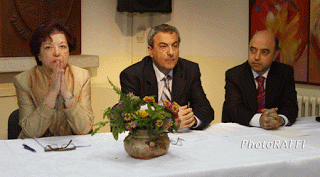
Commenting on Armenians of Lebanon, Haidostian added: “This book, in addition to its various Armenian merits, is to be considered as a chapter in Lebanese history and culture,”
He further stated that the Haigazian Armenological Review, a well-established academic journal, is this year moving towards additional publications in Armenian studies and will soon celebrate its 40th anniversary by publishing its 30th volume.
He concluded with the hopeful statement that “we, in the season of Resurrection, and on the doorsteps of the 95th anniversary of the Genocide, are ready to embrace the future.”
The program ended with a book signing and reception in the Mugar building.

Մայրիկիս (To My Mother)
Painting Night for the Renovation of the Chanitz Hall to Host the World Cup Lovers
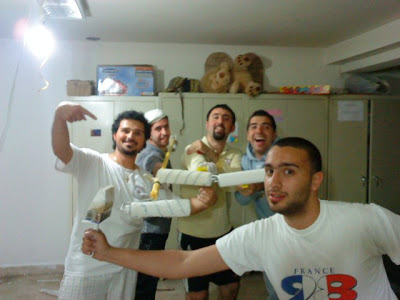
While the World Cup kick off date gets nearer, Emmanuel Chanitz prepares to organize social and fellowship hours, to watch the games together in Chanitz hall.

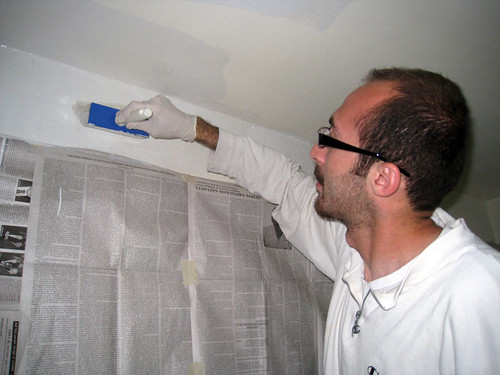
For this reason, a subcommittee was created to put a plan to renovate the Chanitz hall, paint the walls, clean up the place, and make it ready to host the youth, soccer fans, and friends. And indeed, the chanitz-agans put all their effort in turning the Chanitz hall into a place where everyone would come to watch the games and have fellowship together.
Healthy mind, in a healthy body =)

Jiro Gh., Ara T. Garo T., Mike H. Jano B.


Ara T. and Jano B.

Pauline I.

Koko A.

Armig K.

Jiro Gh.

Koko A.
For this reason, a subcommittee was created to put a plan to renovate the Chanitz hall, paint the walls, clean up the place, and make it ready to host the youth, soccer fans, and friends. And indeed, the chanitz-agans put all their effort in turning the Chanitz hall into a place where everyone would come to watch the games and have fellowship together.
Healthy mind, in a healthy body =)
Jiro Gh., Ara T. Garo T., Mike H. Jano B.


Ara T. and Jano B.

Pauline I.

Koko A.

Armig K.

Jiro Gh.

Koko A.
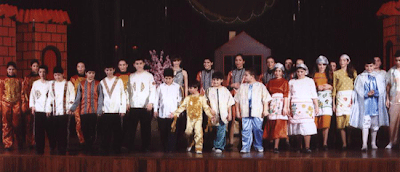
Armenian Evangelical Torosian School's "Yeraz" Theatre Performs in Damascus, Syria

Organized by the Armenian Evangelical Church of Damascus, and with the patronage of the Syrian Armenian Evangelical Churches' community leader, Rev. Haroutioun Selimian, on Tuesday, 6 April, 2010, the "Yeraz" theatre group, with thirty two members left to Damascus, to perform "Vosgi Tsgnige" in the Russian Cultural Center.
The performance started with the Syrian and Armenian anthems. Present were the Syrian Armenian Evangelical Churches' representative, the pastor of the Armenian Evangelical Church of Damascus, Badveli Datev Basmajian, Archbishop Armash Nalbandian, virtuous sisters, representatives of organizations, guests and fellow countryman.
The audience loved the performance and appreciated the effort. After which, the director, Mr. Robert Arakelian, was invited to the stage, who took the opportunity to thank each and every one who worked and supported the group.
The event was closed with prayer.