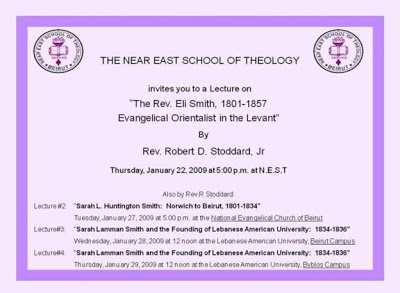
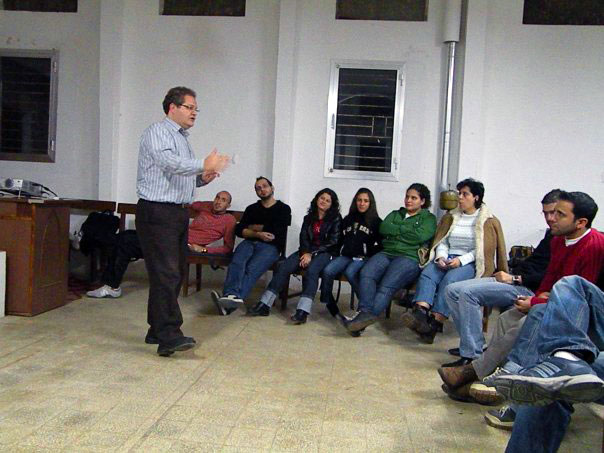
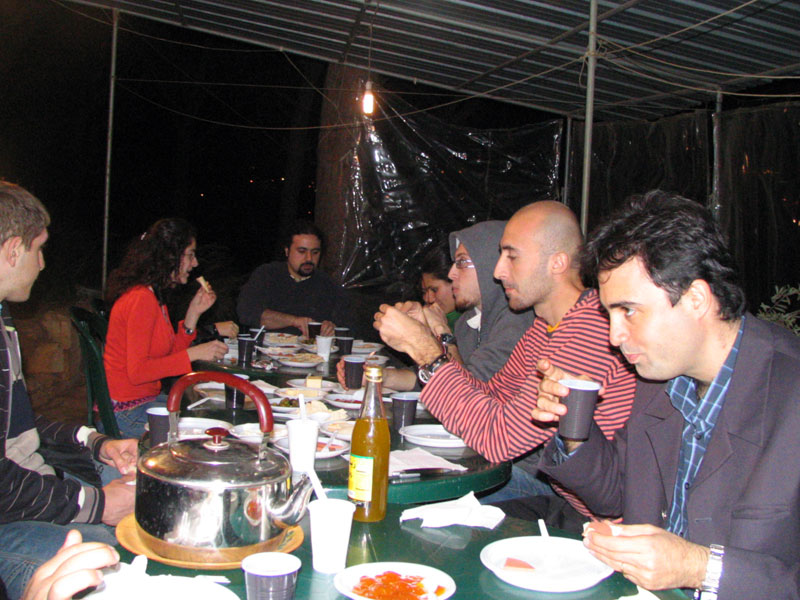
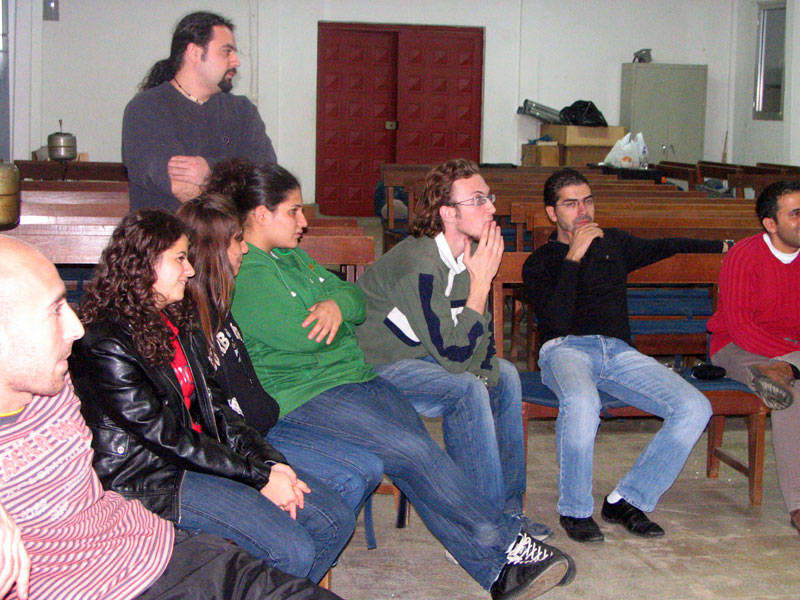
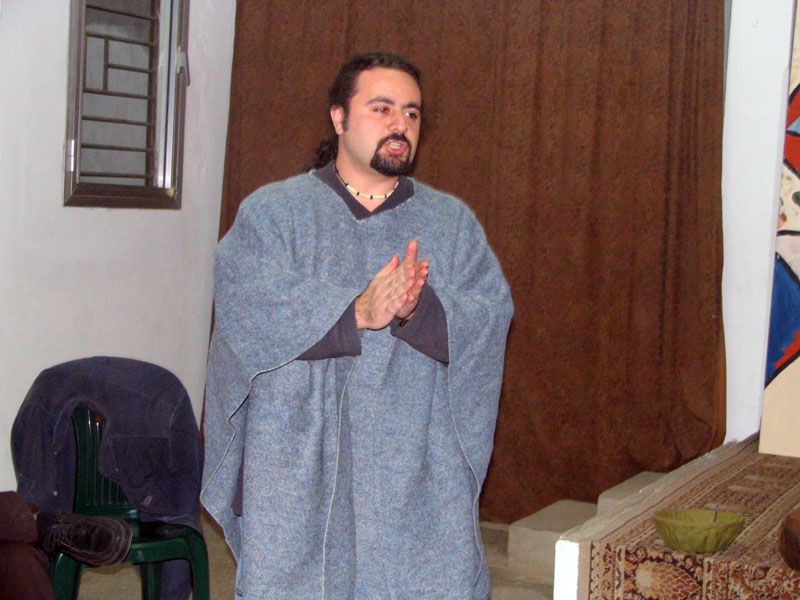
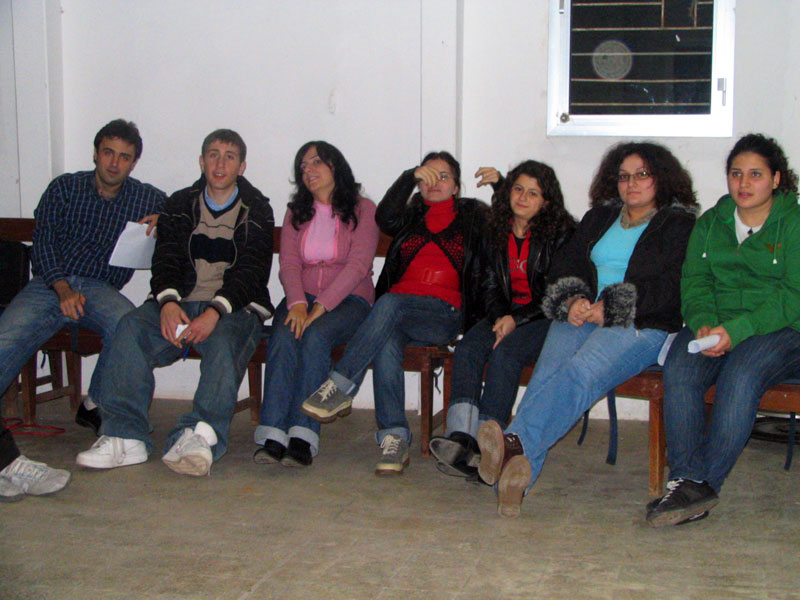
NEST Lecture by Rev. Robert D. Stoddard, Jr.


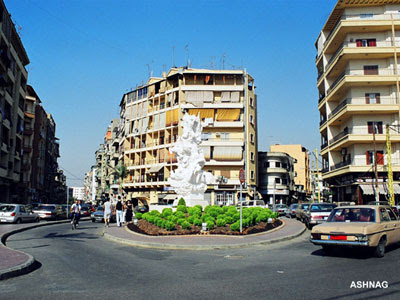
Eli Smith (1801-1857) was an American Protestant Missionary and scholar, born at Northford, Conn. He graduated from Yale in 1821 and from Andover Theological Seminary in 1826. He worked in Malta until 1829, then in company with H. G. O. Dwight traveled through Armenia and Georgia to Persia. They published their observations, Missionary Researches in Armenia in 1833 in two volumes. Eli Smith settled in Beirut in 1833. Along with Edward Robinson, he made two trips to the Holy Land, then pursued the task which he considered to be his life's work: translation of the Bible into Arabic. Although he died before completing the task, the work was completed by C. V. Van Dyck of the Syrian Mission and published in 1860 to 1865. (Wikipedia)

“SET A P A R T ”

By Sarene Kushdilian

Issue #10: Summer 2006, CAMP AREV NEWSLETTER, USA

Are Christians different than others in the world? Is there something that sets us apart from our non-believing friends? In the book of 1 Peter, Peter addresses heavily persecuted Christians and instructs them to “keep [their] conduct...honorable.” In fact, he speaks to these Christians saying, “Beloved, I urge you as sojourners and exiles to abstain from the passions of the flesh, which wage war against your soul. Keep your conduct among the Gentiles honorable, so that when they speak against you as evildoers, they may see your good deeds and glorify God...” (1 Peter 2:11-12).
Here, Peter addresses Christians as “sojourners and exiles,” separating them (and believers now) from being a part of this world. Urging Christians to “abstain from the passions of the flesh,” Peter makes clear that we should avoid “impurity, sensuality, idolatry, sorcery, enmity, strife, jealousy, fits of anger,” and things of the like (Galatians 5:19-21). These things, he teaches, “wage war against your soul.” I am sure that at one point we all have experienced this. We know the right thing to do, and yet, the wrong thing is so appealing.

In this way, a type of civil war is roused within us and we debate amongst ourselves what course of action we should take. The Bible makes it clear over and over again that as Christians, we must take the path of the righteous...and we can (Romans 6). Ultimately, God instructs us to “keep our conduct among the Gentiles honorable.” Why? “So that when they speak against you as evildoers, they may see your good deeds and glorify God...” Notice the word “when.” Peter does not say, “they may persecute you;” he says they will.

Likewise, we, too, should be ready, always eager to keep our conduct honorable. For it is not for ourselves we do this, nor for any other worldly reason, but truly for the purpose of glorifying and honoring God.

General Knowledge Contest Among Chanitz Associations

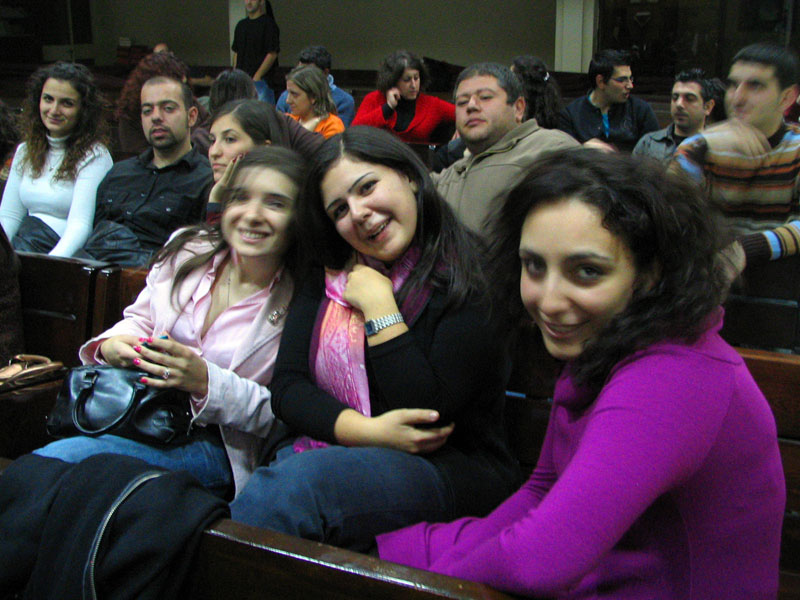
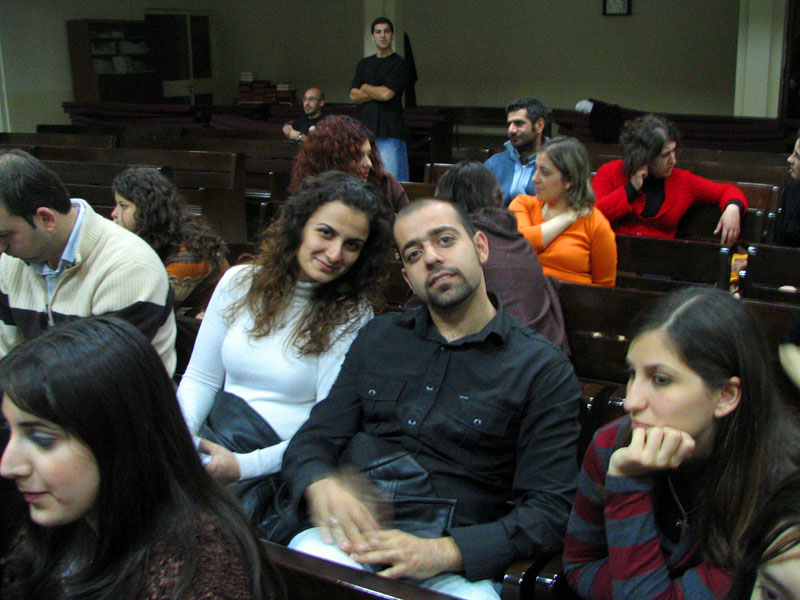
On Firday, 28 November, at 8:30 pm, the Armenian Evangelical Emmanuel Chanitz organized a General Knowledge Contest, held in Emmanuel Church. Representatives from the Armenian Evangelical Marash, Anjar, Ashrafieh and First churches particpated in the contest. Mr. Hagop Gojigian, a member of the Emmanuel Chanitz board, hosted the event. Rev. Hovanness Svajian and Mr. Mano Chilingirian served as jury members, who had also prepared the Religion and Sports questions. Ms. Vartoug Balekjian had also prepared the Armenian questions.

The competition was very close, first between the Marash Chanitz and the Ashrafieh Chanitz, then between First Church Chanitz and Ashrafieh Chanitz. In the end, the Ashrafieh Chanitz team took the lead and came out as the winners of the General Knowledge Contest. Bravissimo! Congrats.!


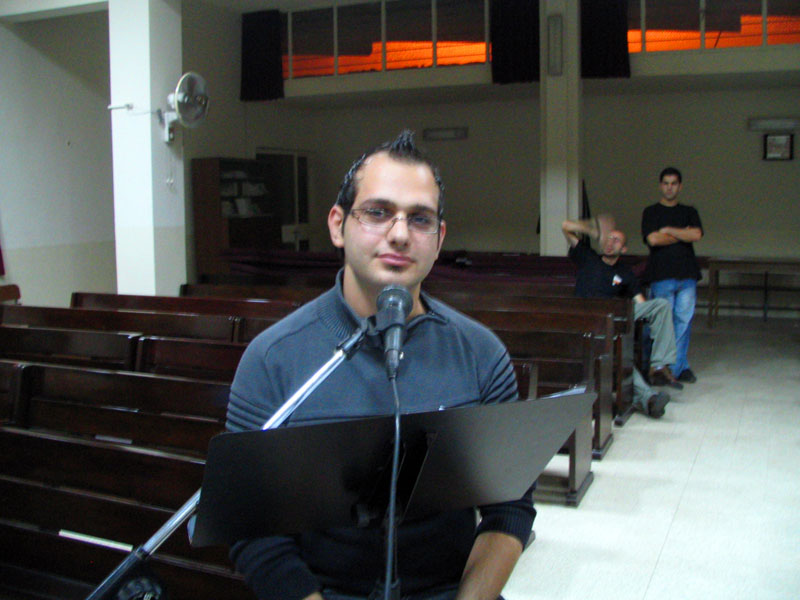
Left pic: Mr. Hagop Gojigian hosting the contest
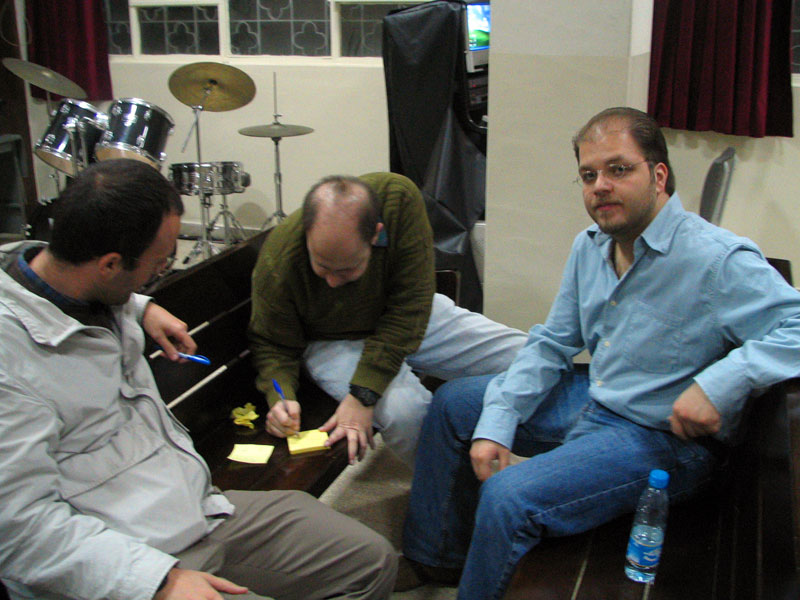
Right pic: Rev. Hovanness Svajian and Mr. Mano Chilingirian as the jury members


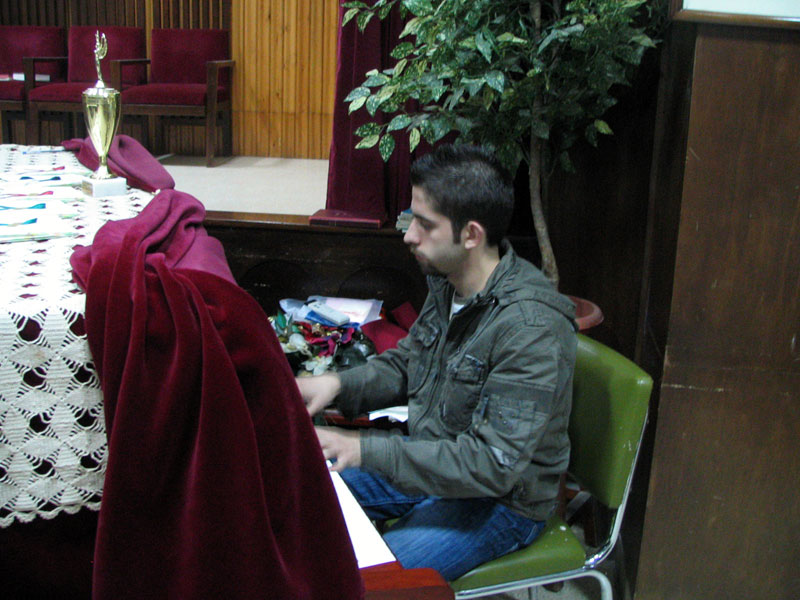
Left pic: Mr. Ara Torkomian playing the Chanitz anthem
Right pic: First Church representatives


Left pic: Ashrafieh Church representatives
Right pic: Emmanuel Church representatives


Left pic: Marash Church representatives
Right pic: Anjar Church representatives


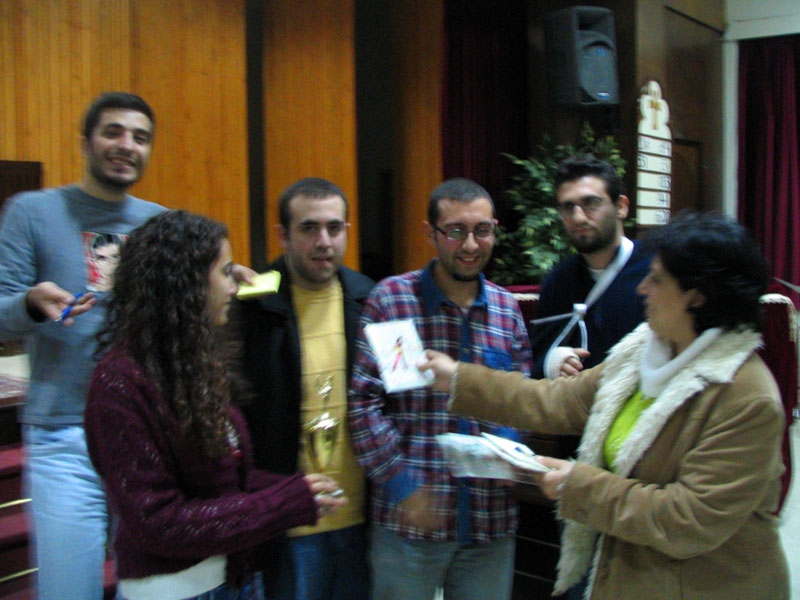
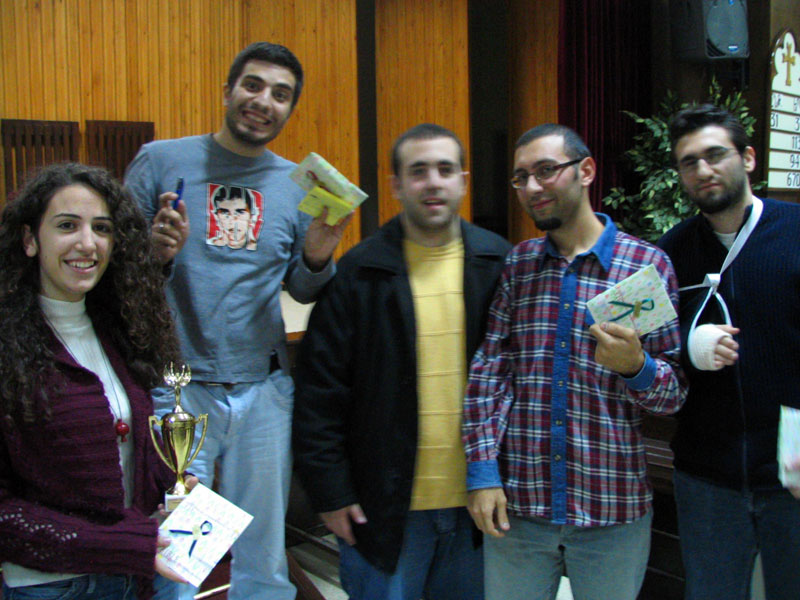
Prizes distributed to the winning team, by Ms. Shaké Geocherian

www.Chanitz.org replaces www.Chanitz.com

An Unfortunate situation turns into an Opportunity. This is how I would describe the problem that we faced when our domain name (chanitz.com) was taken away by Godaddy.com (domain reseller) on January 5, 2009 and sold to another Russian owner, without our prior consent and/or our ability to renew.
The name chanitz.com now links to another website. In spite of this difficulty, we quickly turned this alarming situation into an opportunity to buy chanitz.org and have it as our new domain name.

We would like to ask you to update your links in your Favorites to chanitz.org. Also, this would mean that chanitz.org will need some time to appear on the search engines of Google and Yahoo.

We appreciate all those who contacted us personally and reported their concern, which reflected their appreciation for the hard work achieved and their belief in the mission that the Armenian Evangelical Chanitz blog serves within the Armenian Community in general and the Armenian Evangelical Community in specific.

Sincerely,
Raffi Chilingirian, Administrator

Serouj Charkhedian From California

Serouj Charkhedian, one of the chanitz-agans of the Armenian Evangelical Emmanuel Church, who resides today in California, USA, gave Lebanon and his family a long visit. His church family and friends welcomed him and together remembered the days spent together.

(L to R): Raffi Chilingirian, Mike Hagopian, Ara Torkomian, Shake Geocherian, Serouj Charkhedian, Arek Karagoezian, Mano Chilingirian, Dzovag Demirjian.

Book Review: Zion’s Christian Soldiers? by Stephen Sizer

A few years ago, one of my Seminary professors said to me that the greatest threat to peace in the Middle East comes from American Christians who have bad theology. While I agreed that many Christians do have bad theology in relationship to the Middle East, I was not so cynical to believe that Christians have that much influence and power to keep peace from being achieved in the Middle East. In this book, Stephen Sizer explained to me that my professor was right.
It took me some two paragraphs into the preface before I knew that I would like and promote the theology of Stephen Sizer. In this book, Sizer gives a Biblical framework to interpret the events of the Middle East and those concerning the end-times, which is far different than what the traditional evangelical line promotes.
There are not too many Christian authors who write a critique of Christian Zionism, so I welcome the writing and leadership of Sizer in the ongoing discourse on how Christians ought to think about the Middle East. I know of only one other author, Colin Chapman (Whose Promised Land?) who has written extensively on the issue from a perspective that is more in line with my understanding of Scripture and theology.
In contrast to Chapman, who does more to explain his amillennialism theology, Sizer takes on an offensive stance against the premillenialists who promote a political and theological position that are not only unbiblical, but dangerous. He goes after the likes of John Hagee of Cornerstone Church, Hal Lindsey of The Great Late Planet Earth, and the Dispensationalists such as Scoffield, tearing down their theology and eschatology. He concedes that his theology is in the minority in the United States, and this book is a sort of appeal not only to American Christians, but Christians everywhere to reject the bad theology that has become the norm in most Christian circles.
At the very onset of the book, Sizer laments that the greatest threat to the church among the Palestinians has been the theology of Christian Zionists. He convincingly argues that Christian Zionism “probably has a greater detrimental effect” (on the Church) than Jewish Zionism, militant Islam and Christian indifference combined. Christian Zionists (most of whom are Dispensationalists) believe that the creation of the state of Israel was a prophetic event in history that more or less hastened the return of Jesus. Their theology basically says that those who bless Israel will be blessed and those who curse it will be cursed (taken from God’s promise to Abraham in Genesis 12).
In this book, Sizer debunks this sort of thinking and provides an alternative interpretation on how God relates to the Jews, how to read the prophesies, and how to understand the end-times. In addition to a more Biblical understanding of the End Times and the theology of Israel, Sizer also raises the warnings of allowing Dispensiational theology to continue to define American and Christian foreign policy.
Christians in the United States continue to lead the way in funding organizations and ministries in Israel who are focused on making sure that the “Biblical” boundaries of Israel are respected and that the temple is rebuilt on the Temple Mount (which would mean the destruction of one of the holiest Islamic shrines). Christian Zionism is a dangerous theo-political position that is hell-bent on supporting the state of Israel by all means possible, while turning a blind eye to the teachings of Jesus and Scripture.
In this book, Sizer says that Googling his name will turn out the ways that he has been criticized and demonized. I hope that my post here will provide some support for an author who has taken a courageous stand in defending Scripture and the plight of the Palestinian people.

Source: http://www.servingbread.net

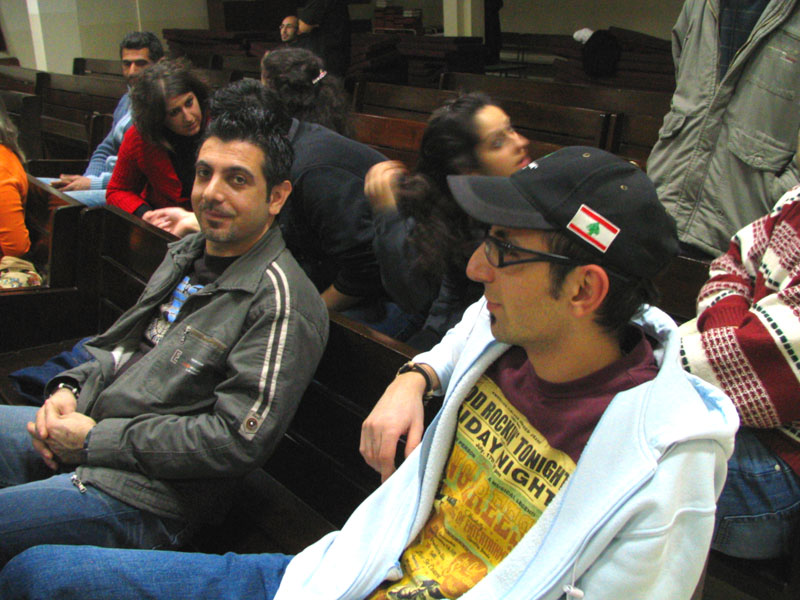
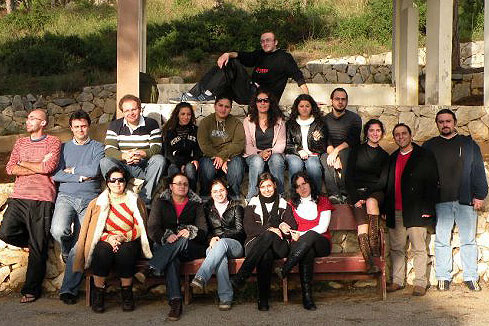
Chanitz Retreat in CE Kchag

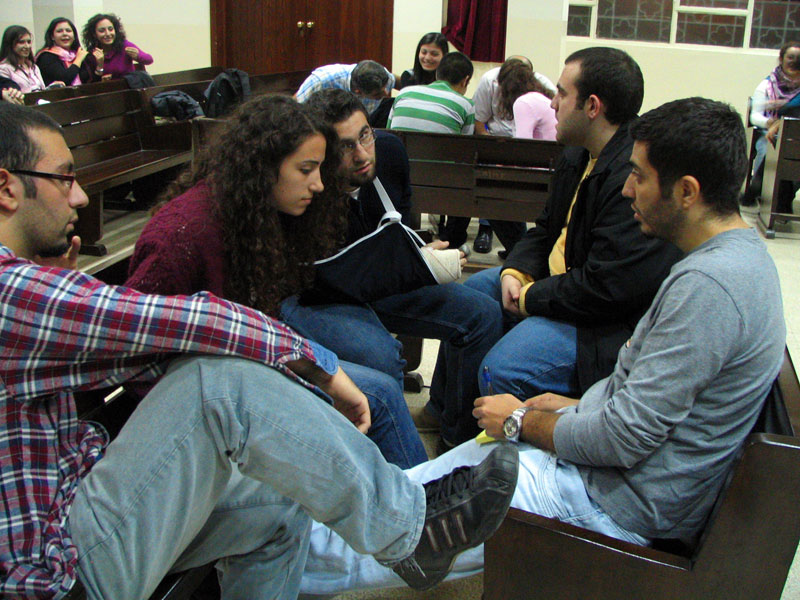
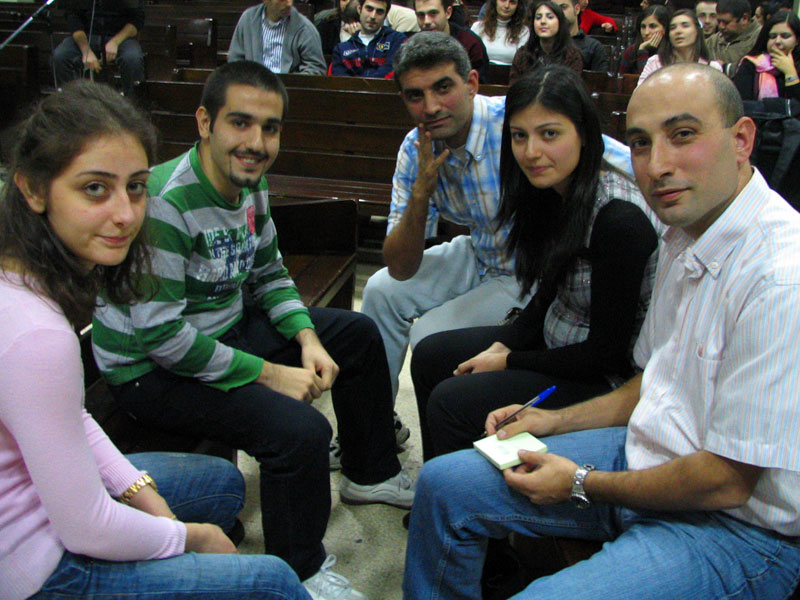
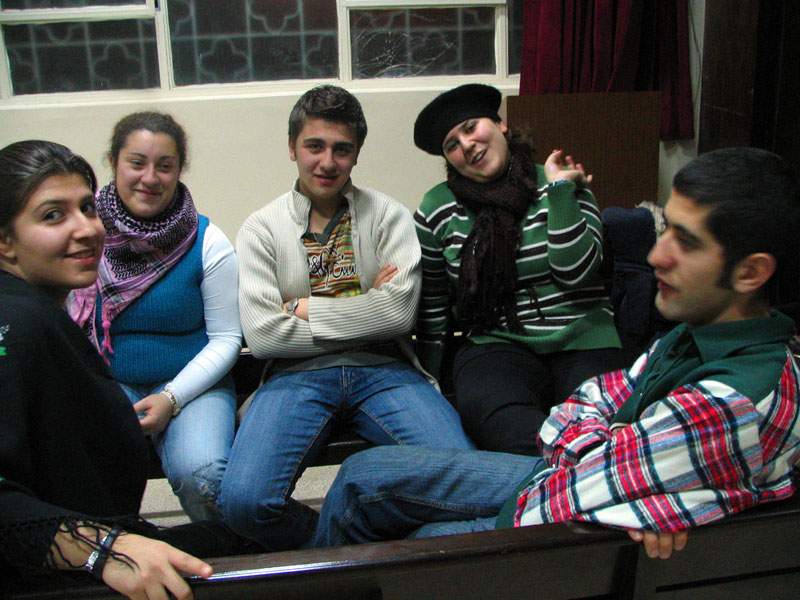
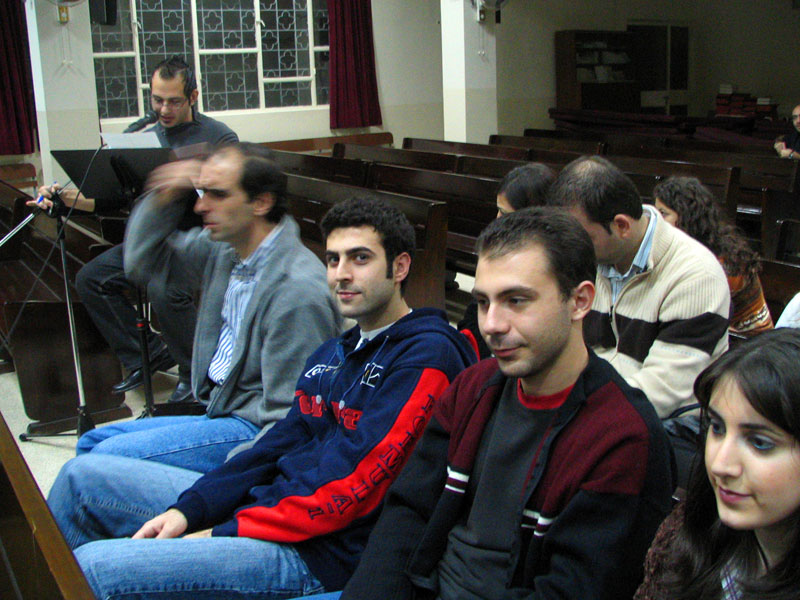
On 21, 22 and 23 November, the Armenian Evangelical Emmanuel Chanitz had their retreat in Kchag Center.
The guest speaker, Badveli Datev Basmajian, pastor of Armenian Evangelical Church of Damascus, talked to the youth about the spiritual gifts and its importance in the life of the church.


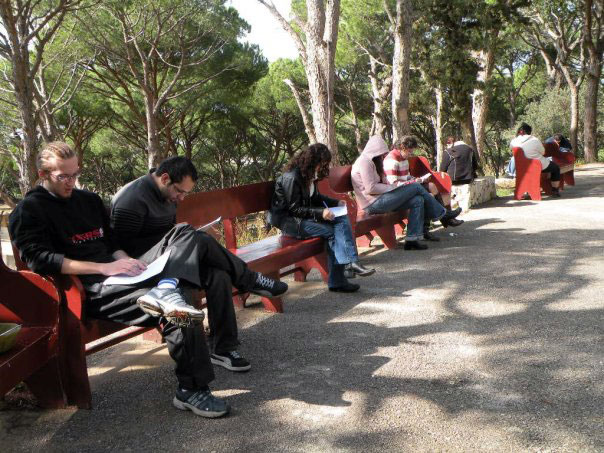
Right pic: during the morning quiet times


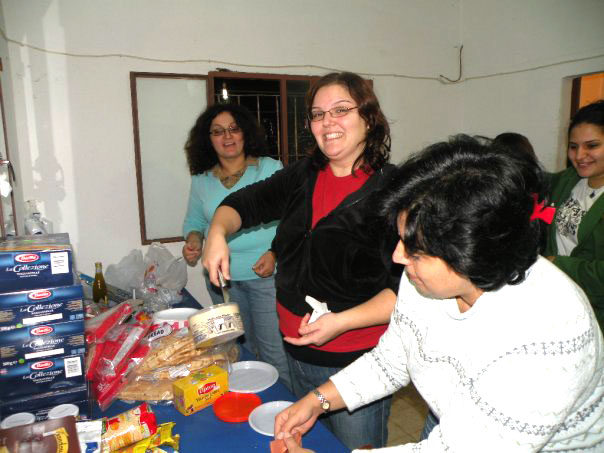
Left pic: Ms. Dzovag Demirjian, Ms. Liza Barsoumian and Mrs. Arsho Kazezian Demirjian


Left pic: Ms. Liza Barsoumian, Mrs. Sirag Karagoezian Basmajian, Ms. Shaké Geocherian
Right pic: Ms. Liza Barsoumian, Mrs. Sirag Karagoezian Basmajian, Ms. Nara Kouzikian


Left pic: worship band with Mr. Shant Aynilian and Mrs. Sirag
Right pic: Pastor Datev during the sessions


Left pic: Ms. Nara Kouzikian, Ms. Pauline, Ms. Kohar Parseghian


Left pic: Mr. Koko Aynilian, Ms. Dzovag Demirjian, Ms. Pauline, Ms. Zaroug, Mr. Shant Aynilian, Mr. Mike Hagopian, Mr. Sam Demirjian and Mr. Hovig Assilian standing
Right pic: Mr. Hovig Assilian