Howard Karageuzian Foundation’s Visit to Haigazian University

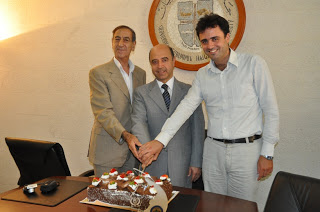
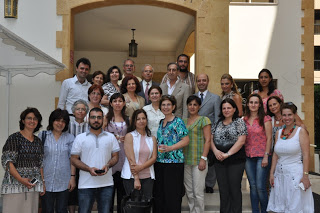
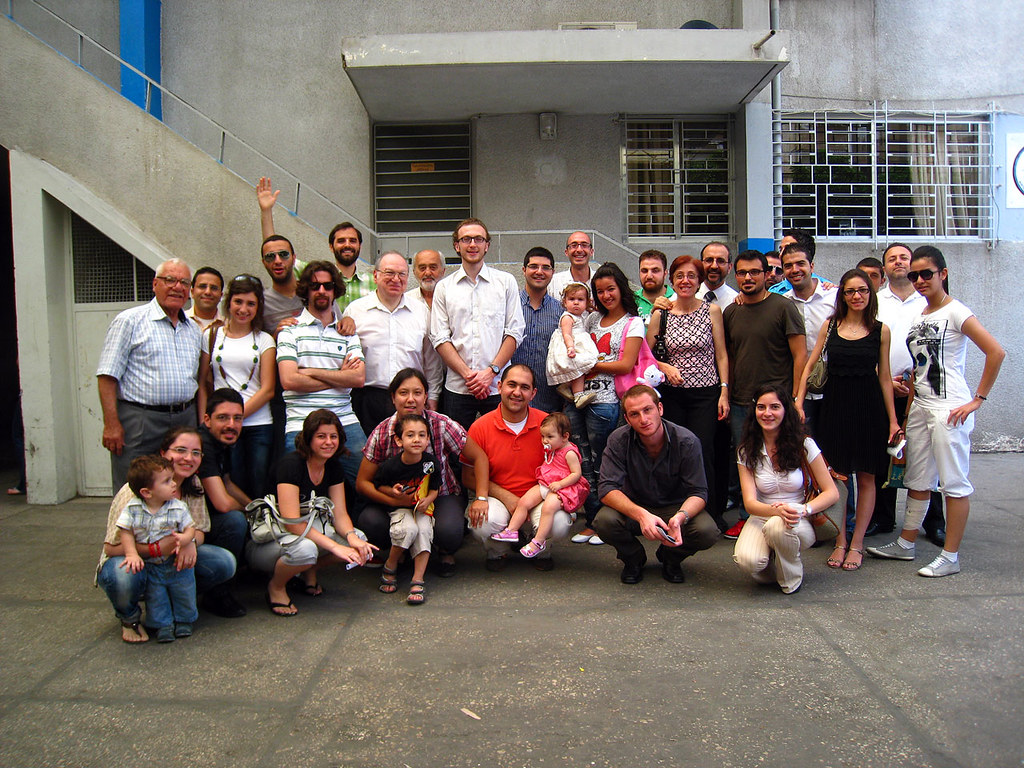
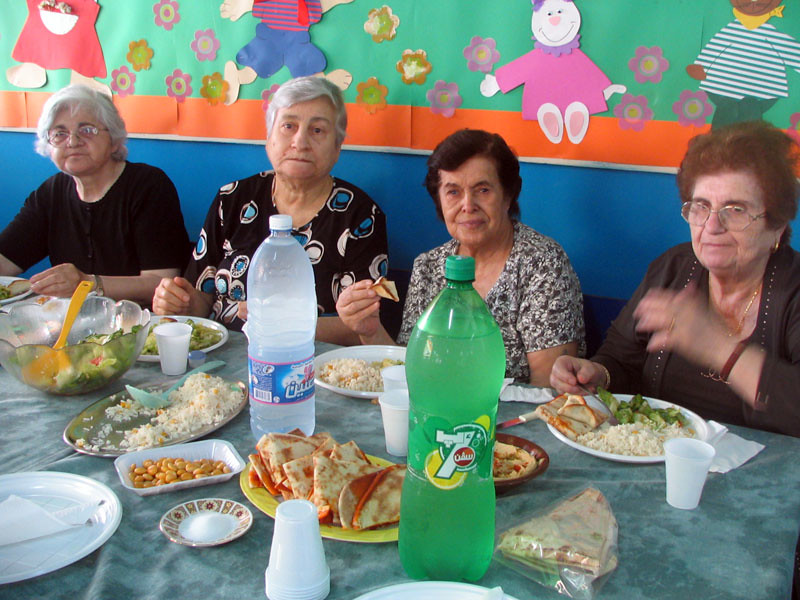
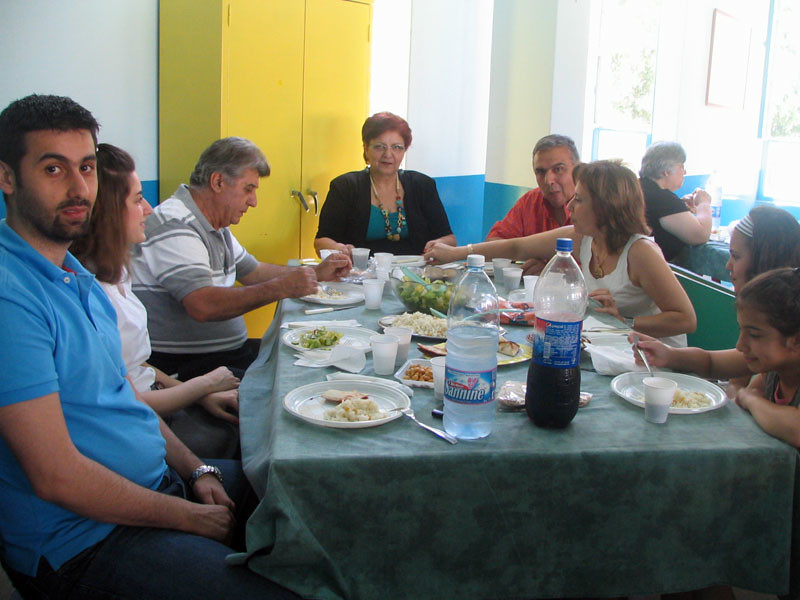
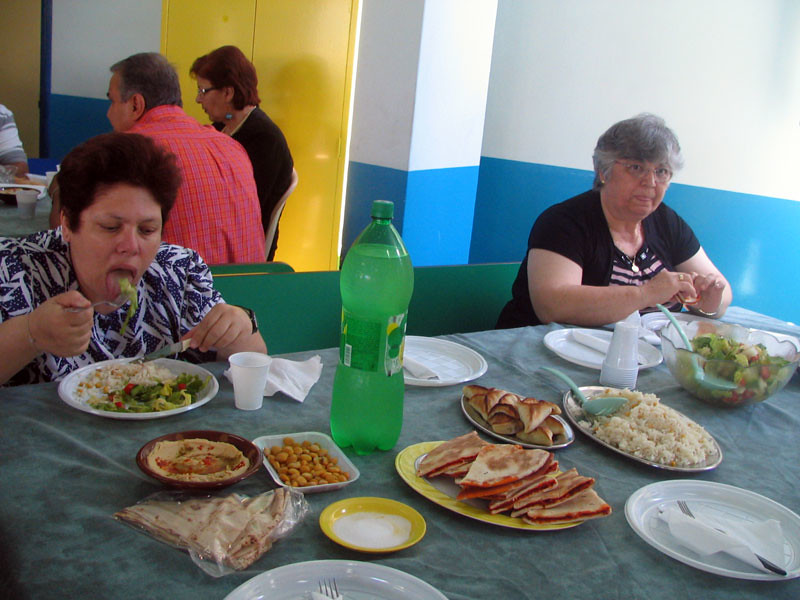
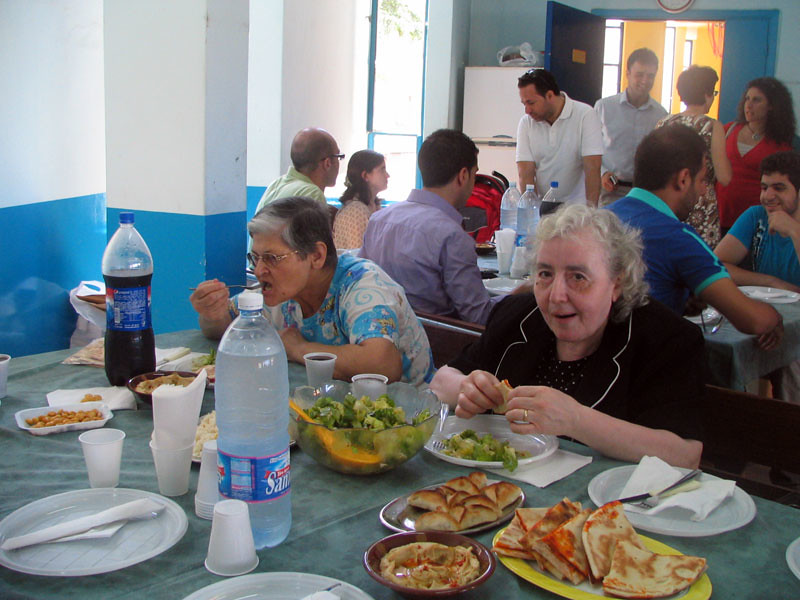
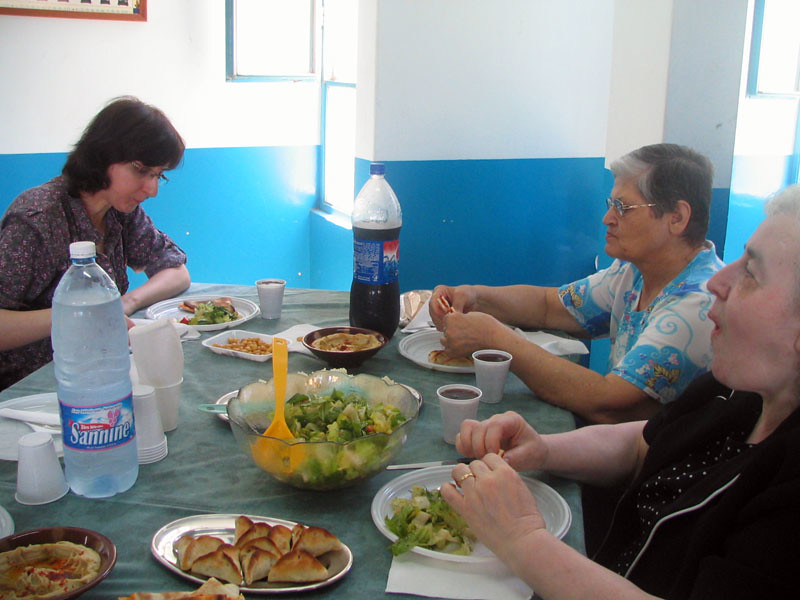
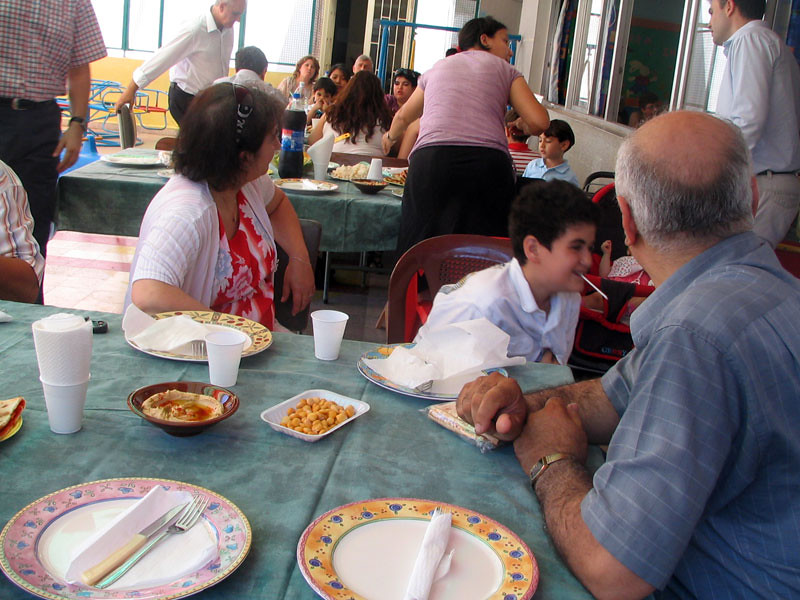
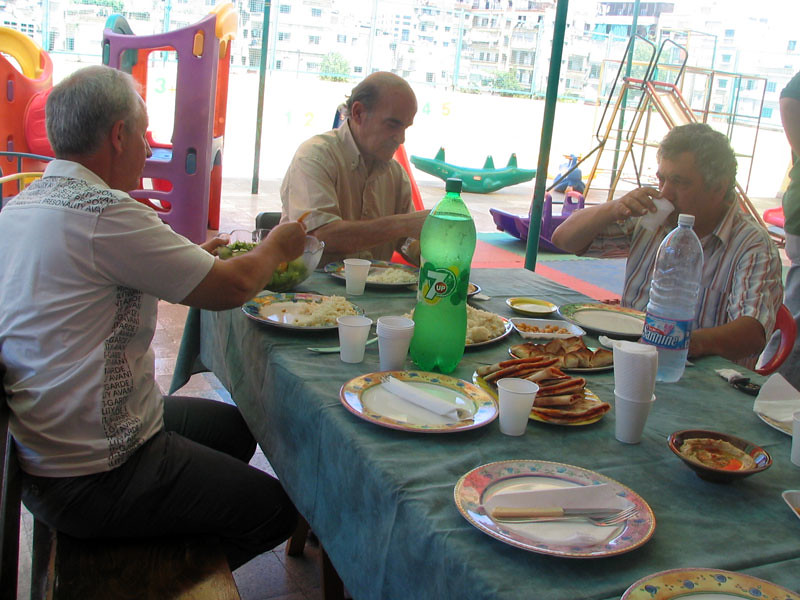
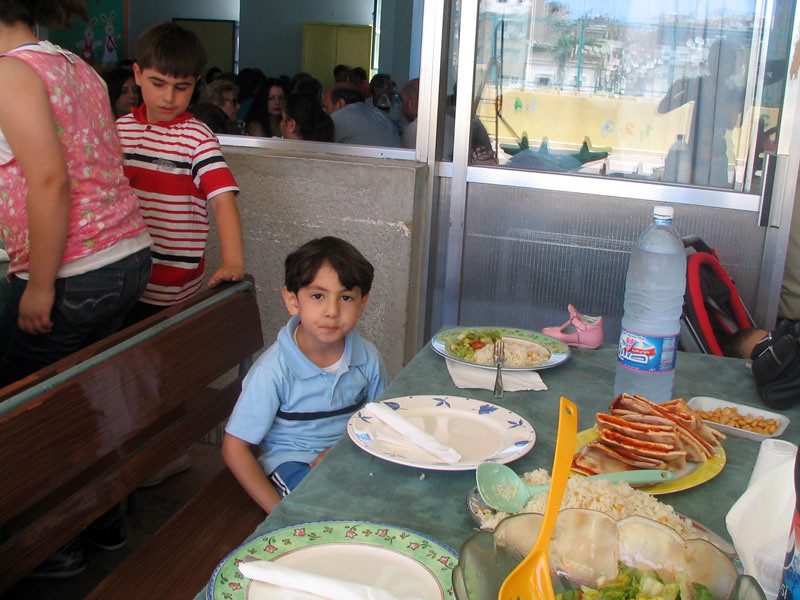
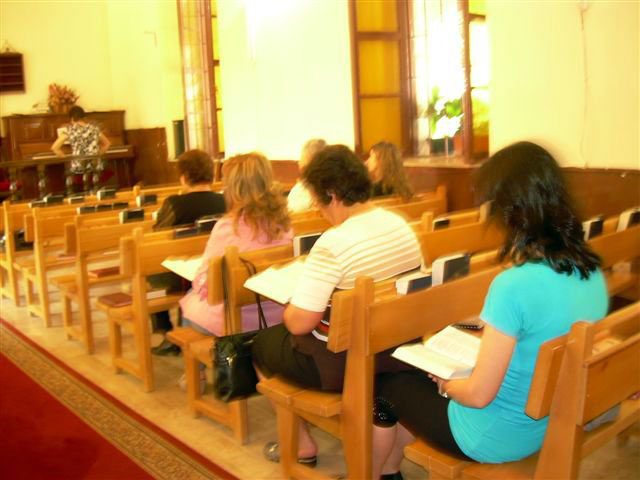
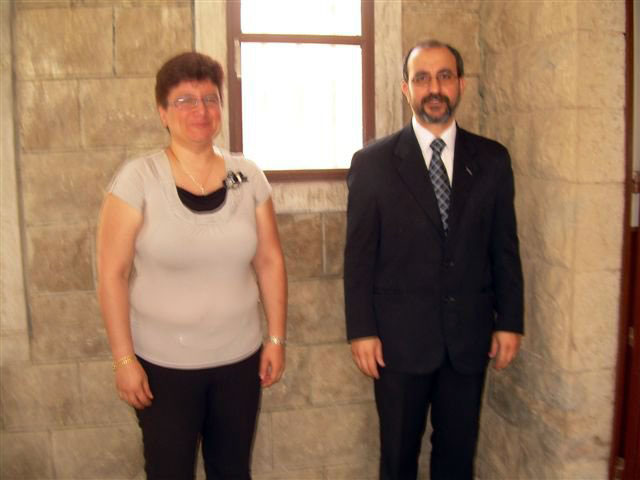
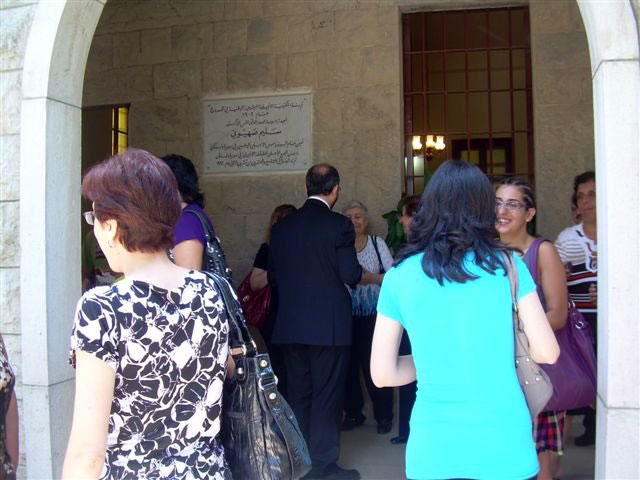
Beirut, July 20, 2011- On Monday, July 18, 2011, on the occasion of the Howard Karageuzian Foundation’s 90th Anniversary, a delegation of 20 social workers, headed by the Foundation’s Director, Rev. Robert Sarkissian, and including representatives and social workers of various Armenian foundations paid a visit to Haigazian University.
The purpose of the visit was to express gratitude and thankfulness to those institutions which have cooperated with the foundation ever since its establishment in Lebanon 70 years ago, as it was pointed out by Rev. Sarkissian, who also highlighted the beneficial relations between the Howard Karageuzian Foundation and Haigazian University in particular. “Both institutions share the same vision and have the same mission of serving the Armenian and local communities, each in its own domain”, Sarkissian noted.
Haigazian University President, Rev. Dr. Paul Haidostian shared with the visitors the importance of the “social work” major at Haigazian University. “We are providing our best in preparing social workers and funding this major, yet, our best is much less than what our community needs”, Haidostian stated.
Mr. Serop Ohanian, a Haigazian graduate, who will succeed Rev. Sarkissian, was introduced to the audience who shared some reflections as being a Haigazian University student and thanked Rev. Sarkissian for being his mentor for the past nine years.
In conclusion, tokens and gifts of appreciation were exchanged and a celebratory cake was cut to mark this special occasion.

Mira Yardemian
Public Relations Director

Pope may go online to launch Vatican news portal

Associated Press

VATICAN CITY: The Vatican, whose communications problems are no secret, is taking a leap into the world of new media with the launch next week of a news information portal that Pope Benedict XVI himself may put online with a papal click.
Vatican officials said Saturday that Benedict has been following the development of the portal, which will for the first time aggregate information from the Vatican's various print, online, radio and television media in a one-stop-shop for Holy See news.

The portal, www.news.va, is being launched Wednesday, the 60th anniversary of Benedict's ordination as a priest and a feast day in the church.

Monsignor Claudio Maria Celli, who heads the Vatican office that developed the portal and will maintain it, said Benedict may put the site online himself with a click from the Apostolic Palace.


Monsignor Claudio Maria Celli shows to journalists the new portal, www.news.va, during a press conference at the Vatican, Saturday, June 25, 2011. The Vatican, whose communications problems are well known, is taking a leap into the world of new media next week with the launch of a news information portal that Pope Benedict XVI himself may put online with a papal click.


"This is a new way of communicating," Celli said during a preview of the site at the offices of the Pontifical Council for Social Communications.

It's the latest effort by the Vatican to bring its evangelizing message to a greater, Internet-savvy audience and follows its forays into Facebook, Twitter and YouTube.

It's also a significant step for the 84-year-old Benedict, who has been bedeviled by communications woes during much of his six-year papacy, much of it the fault of a large Vatican bureaucracy that doesn't always communicate well internally.

There was his 2005 speech about Islam and violence, his recent comments about condoms and HIV that required no less than three official Vatican clarifications, and his rehabilitation of a Holocaust-denying bishop, among others.

While the portal is designed mostly to provide Vatican news in an easy-to-use setting for the outside world, Celli said he hoped it would also improve the Vatican's own internal communications by letting various departments know what one another are up to and help provide a more coherent message.

"I think that we must educate the Roman Curia of what is the real meaning of communication," Celli said. "Little by little they will perceive that this is the real meaning to be present, to have a relevance." Previously, popes have been very much involved in the Vatican's communications efforts: Pope Pius XI personally inaugurated Vatican Radio in 1931, and Pope John Paul II oversaw the 1995 launch of the Vatican's website.

That site will remain as the Holy See's main home page and documentation warehouse. And each of the Vatican media that are represented on the news portal will retain their independent sites as well: Vatican Radio, the newspaper L'Osservatore Romano, Vatican Television Center, the Vatican press office and information service and the Fides missionary news agency.

The portal, though, will aggregate their main news, initially in English and Italian then other languages, and be updated three times a day, Celli said. The portal is outfitted for live-streaming of papal events, audio feeds from Vatican Radio, photographs from L'Osservatore Romano and printed texts of papal homilies, statements and speeches.

It's also designed to be social-media friendly, with Twitter feeds and Facebook links, part of the Vatican's recent realization that it can reach a wide new audience by interacting with the outside world rather than merely preaching from afar.

There are no search functions on the portal or an obvious link to the Vatican's main home page, but that may come in an update of the site, officials said.

An Interview with Hagop Akbasharian and Betty Kechejian About Their Participation in the Exchange Program with Christian Action in Orient (ACO) France

For the 2nd time now, four youth participated in the exchange program between UAECNE (Union of the Armenian Evangelical Churches in the Near East) Lebanon and ACO (Christian Action in Orient) France. Mr. Hagop Akbasharian (student of the UAECNE), Mr. Jiro Ghazarian (student of the UAECNE), Ms. Aline Khederian (chanitz member of the Armenian Evangelical Church of Nor-Marash), Ms. Betty Kechejian (chanitz member of the Armenian Evangelical Church of Ashrefieh) participated. On this occasion and in order to further understand about the program and their experience, we approached the four participants and thankfully we received responses from both Hagop and Betty.  

(Interview by Raffi)

Raffi - Can you tells us about this exchange program, who the organizers are and where it is taking place?
Hagop - This exchange program is part of the partnership between the Union of the Armenian Evangelical Churches in the Near East (UAECNE) and Christian Action in Orient (ACO) which takes place once every few years (usually four years). It is an exchange program between youth from Lebanon who attend member churches of UAECNE and youth from France who are members in ACO.

Raffi - What is the purpose of this exchange program?
Hagop - Usually, French participants come to Lebanon, specifically kchag, for ten days to be acquainted with the Lebanese-Armenian culture, experience the way Christian believers live their faith in the Middle East in general and in the churches of UAECNE in particular, do some social/practical work and enjoy the touristic areas of Lebanon, its food and good mood. The following year, the Lebanese participants of the first part of the exchange would go to France, mainly Alsace, Strasbourg for the same reasons mentioned above.

Raffi - What kind of subjects did you discuss in last year's exchange program?
Hagop - During last year’s exchange program we discussed about “Laicity” in France and the situation of the Church in Lebanon, especially the presence of the Armenian Evangelical Church in the Lebanese reality; moreover, we had discussions about sexuality, premarital and extramarital sex, culture and its influence within church dogmas and practices. The growing number of Muslims in France was also a topic that was present in various conversations.
Betty - We discussed many things, from spiritual topics to social ones. We discussed whether church attendance is important for a good spiritual life, also about relationships and what's acceptable in each society. About marriage and their view about it - all of these discussions were informal ones between a few people, not a formal group discussion. 


Raffi - What are the differences that you perceived between the convictions and mentality in Lebanon and France?
Hagop - Individuals within the same country think and act in different ways; thus, it’s very normal and expected that an exchange program between different countries will experience differences in perspectives, convictions and belief systems. The differences that I observed were mainly that of culture and the role of the Church in society; however, in my opinion, these differences were not huge ones because similar differences are observed within different groups in our Lebanese community too; hence, these differences don’t hinder human relationships, but challenge human beings to think outside their boxes and personal bubbles. Whenever convictions are challenged, human interactions go from superficiality into a deeper level of mutual understanding. It is at that stage of relating to the other where a real exchange of thought and faith in God happens; consequently, faith enters the process of seeking understanding. If these kinds of exchanges between youth have even the slightest influence in triggering this process of understanding, then it can be called a successful exchange.
Betty - There are many obvious differences between French and Lebanese mentalities. The most obvious one is about relationships and what's "acceptable" in relationships. for them faith and sexuality don't have to be against each other. For us abstinence is very important.
Other than that, they are more laid back in nature, and don't stress as much as we do, which has to do with political issues and lifestyle differences. Oh and they're more open to talk about things. Topics which we consider taboo to discuss are ok for them to talk about.

The Banquet of the Armenian Evangelical Emmanuel Church

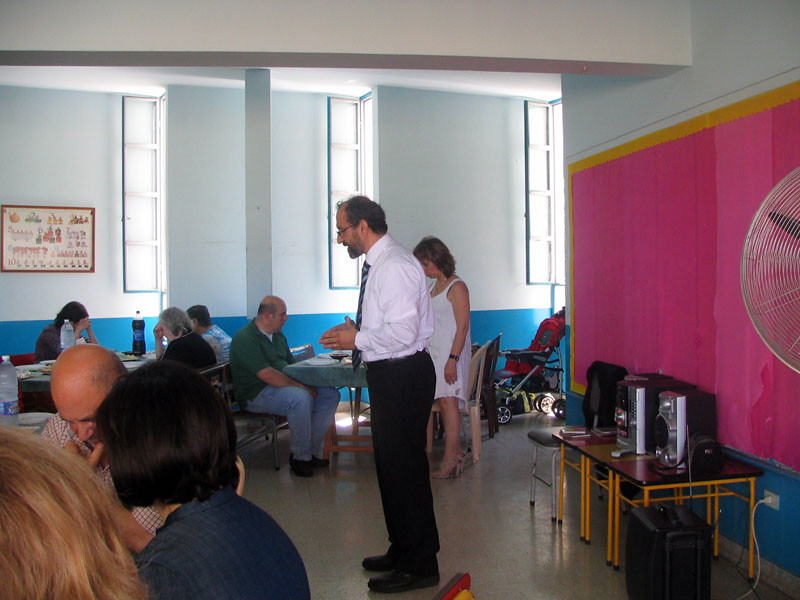
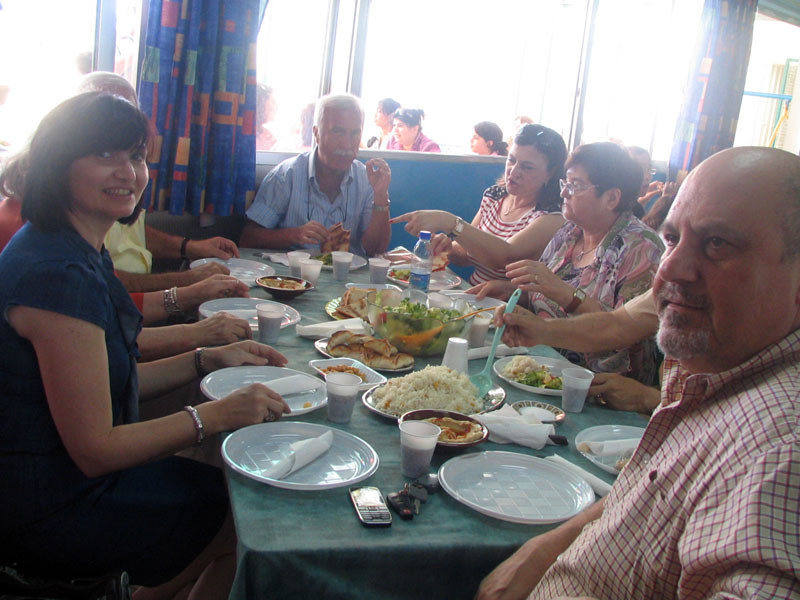
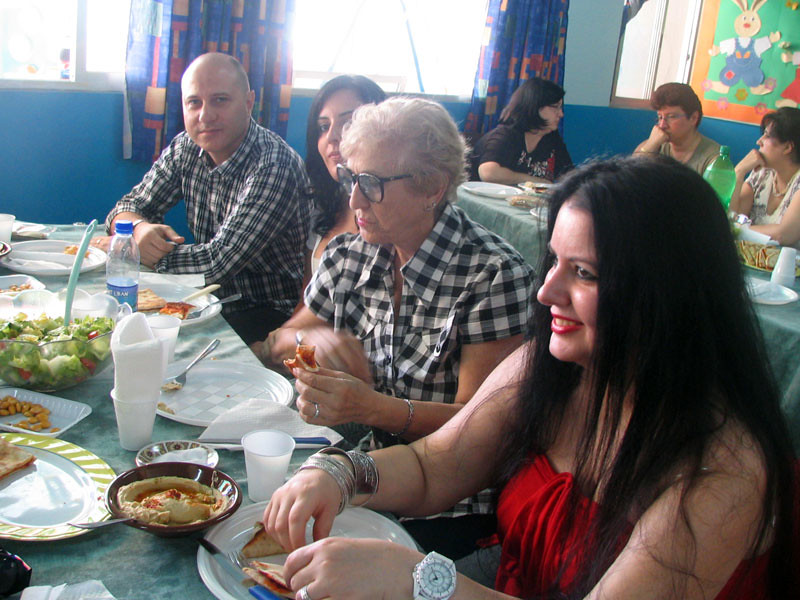
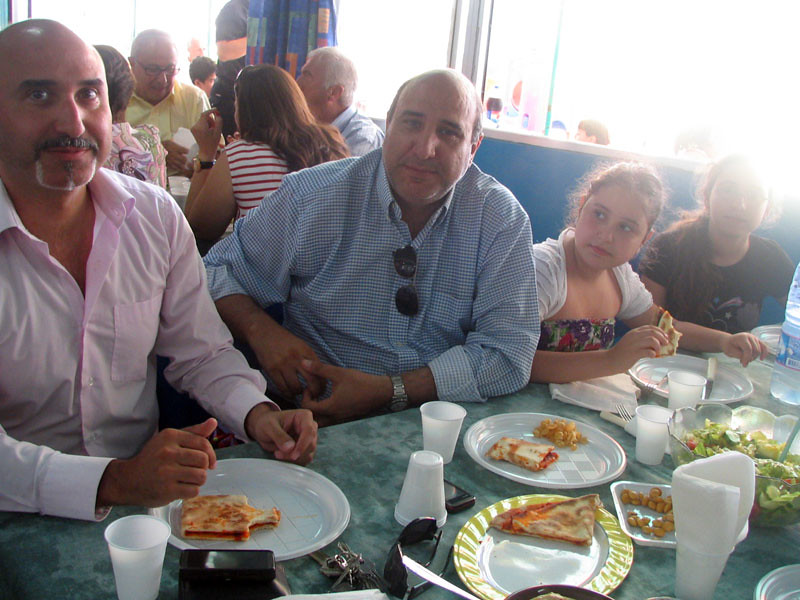
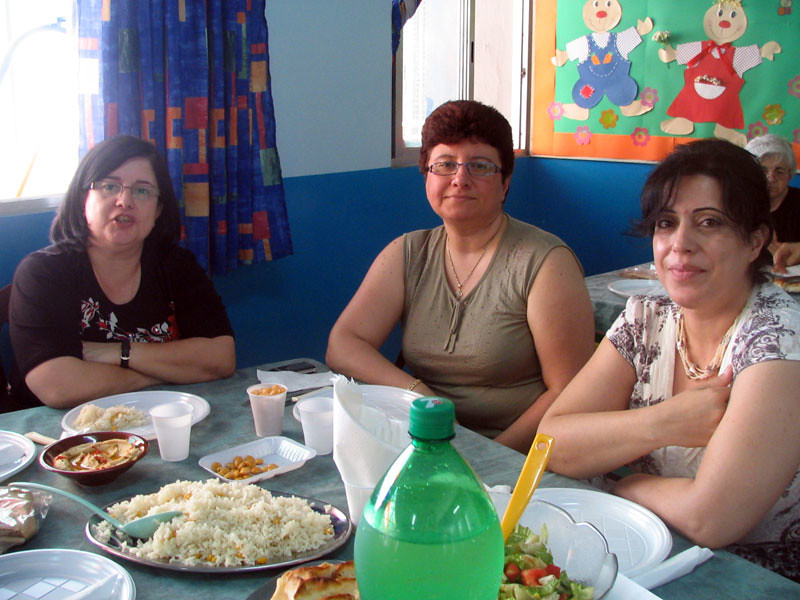
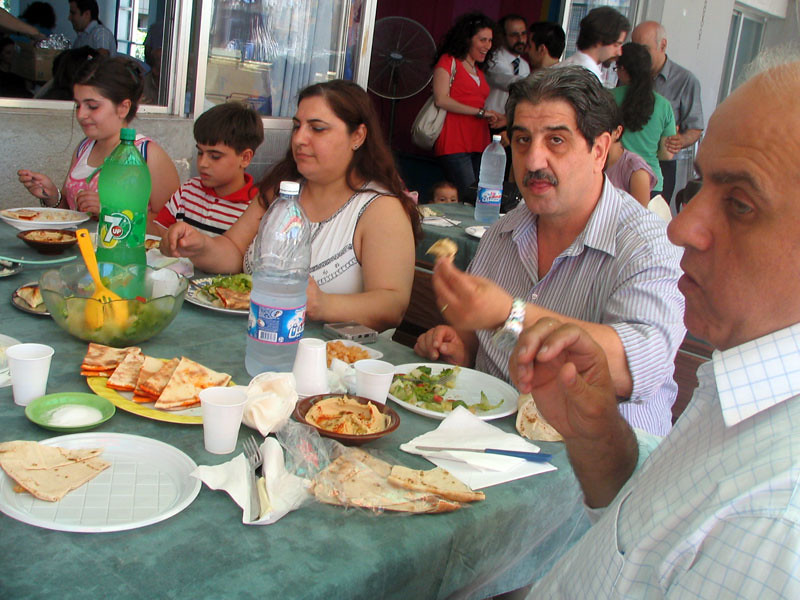
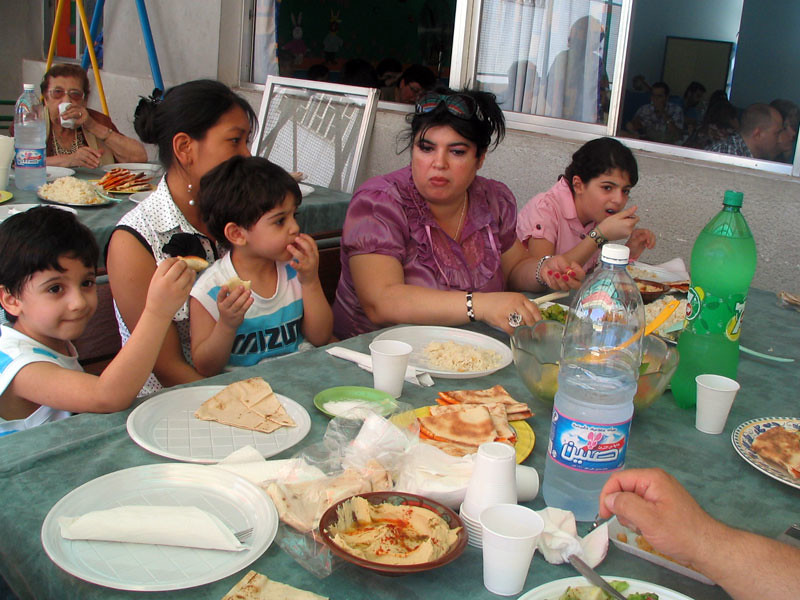
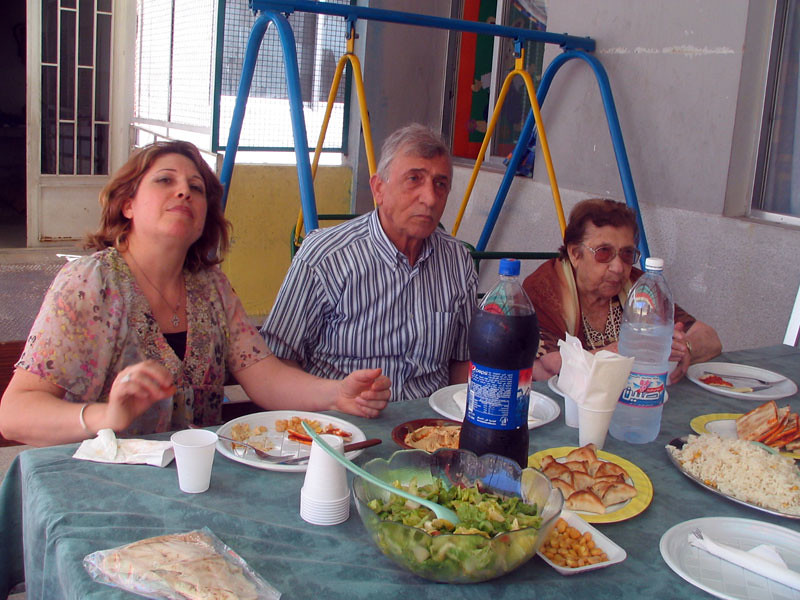
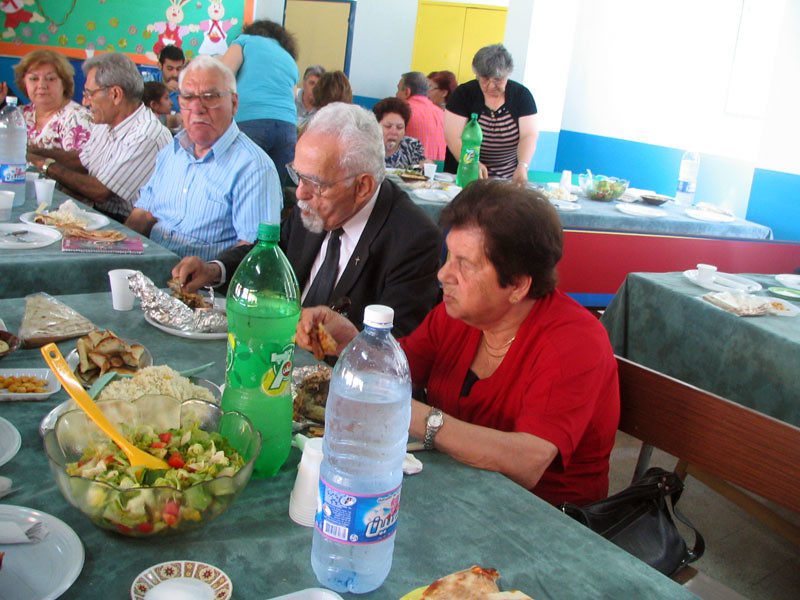
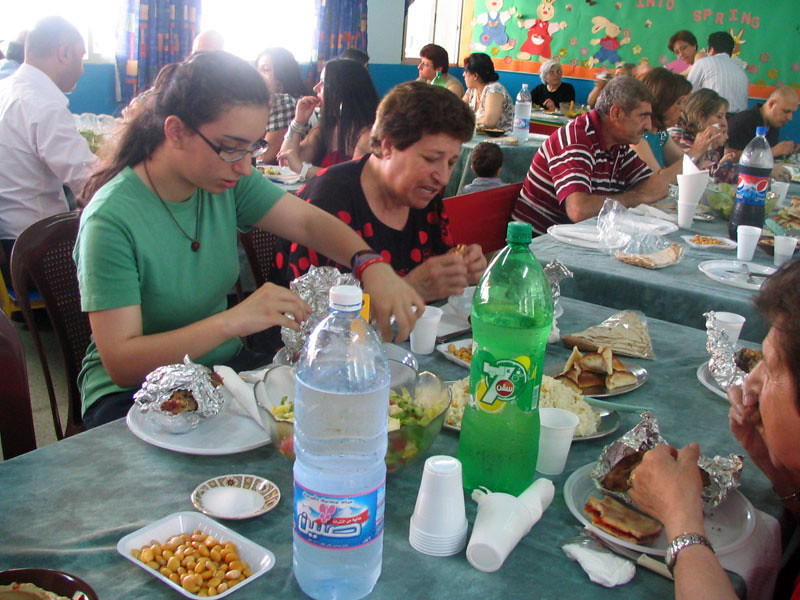
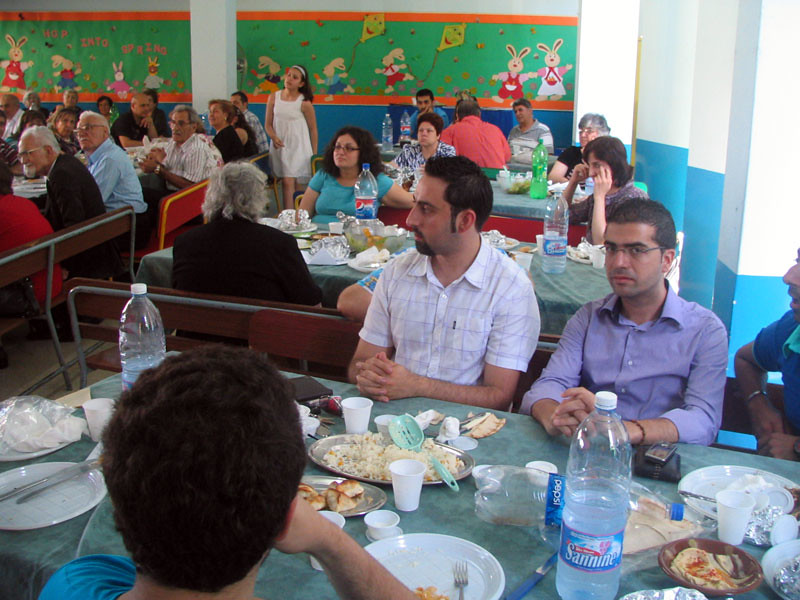
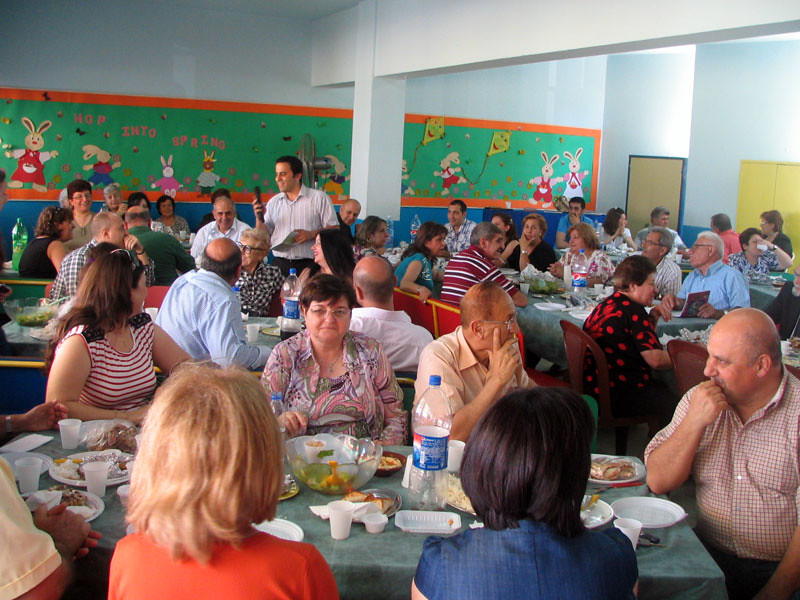
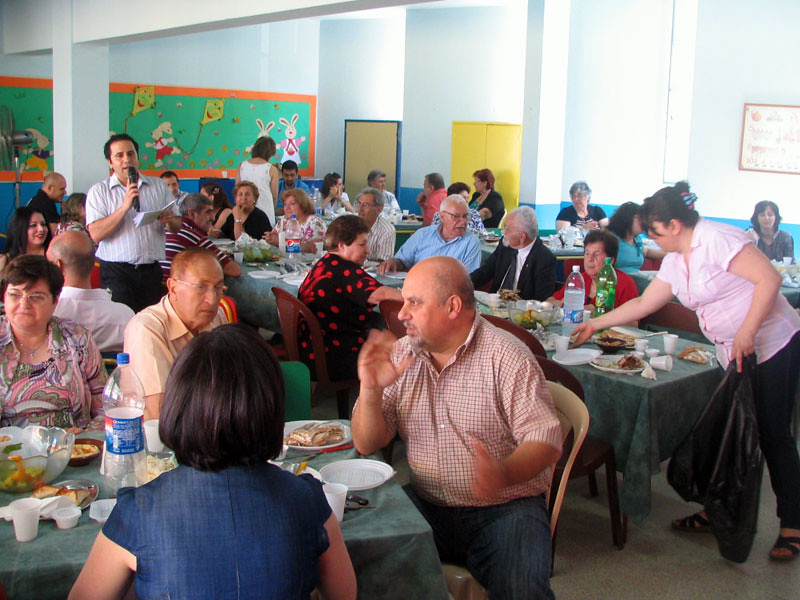
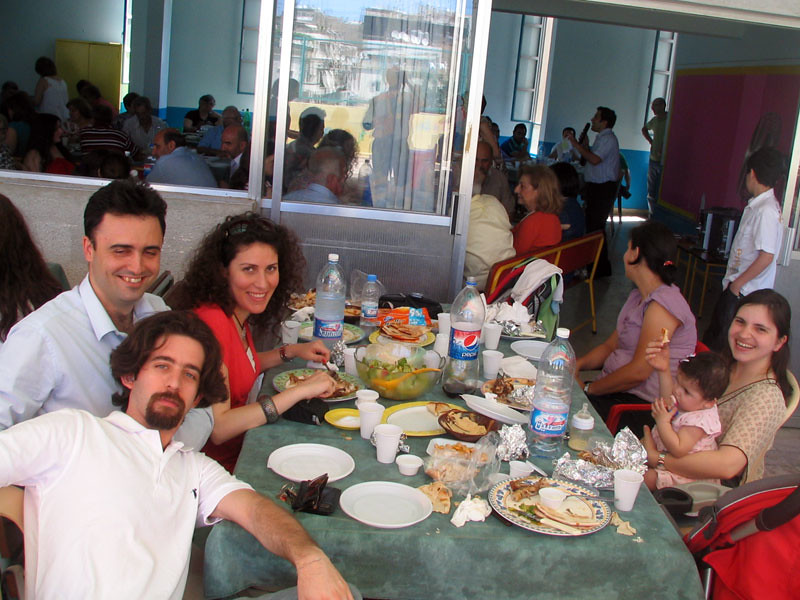
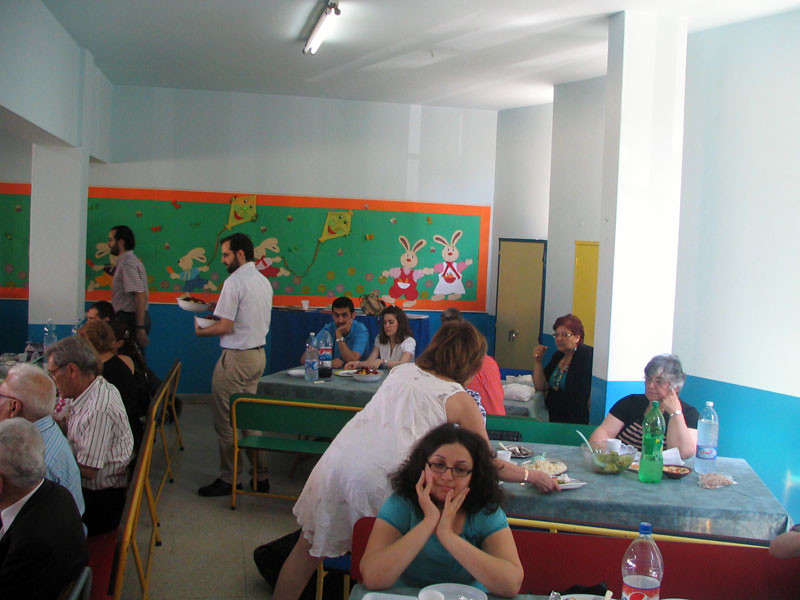
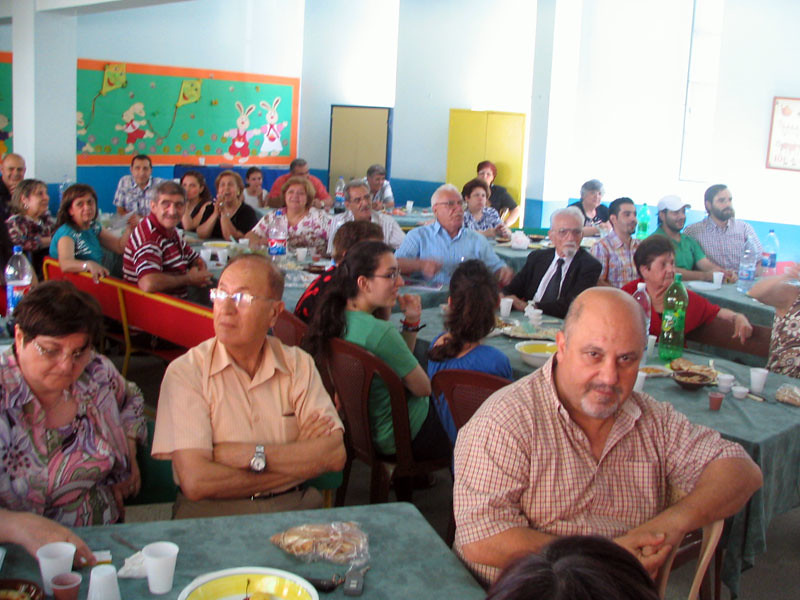
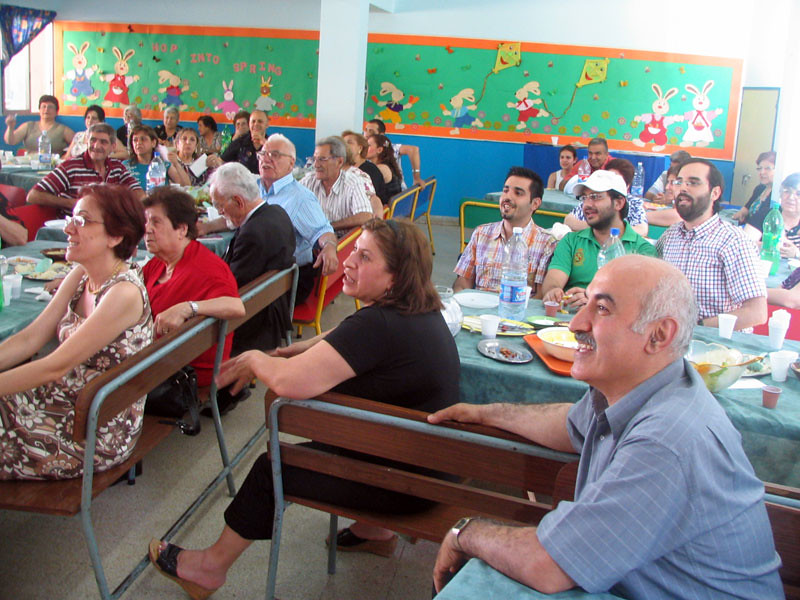
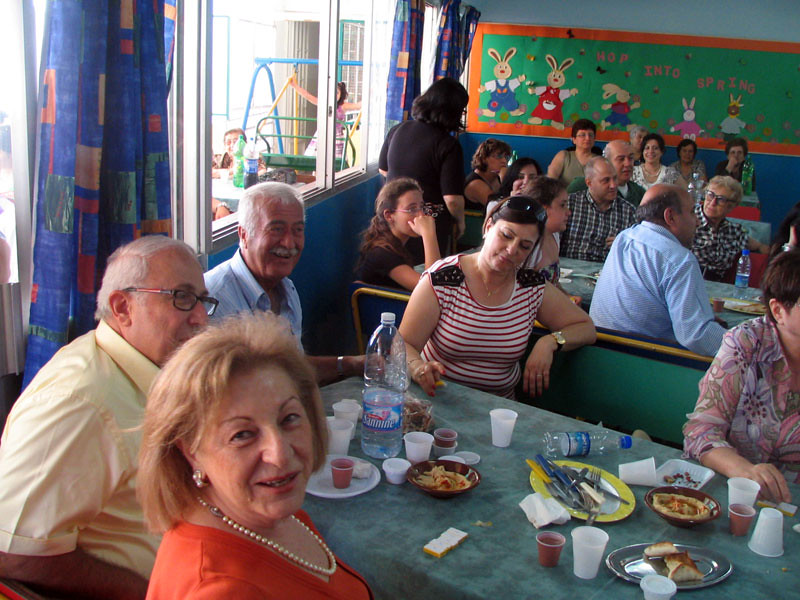
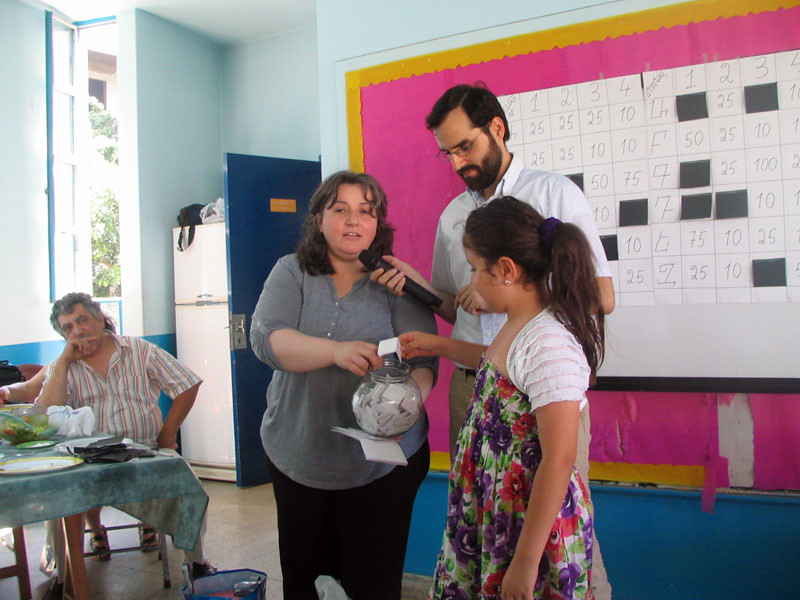
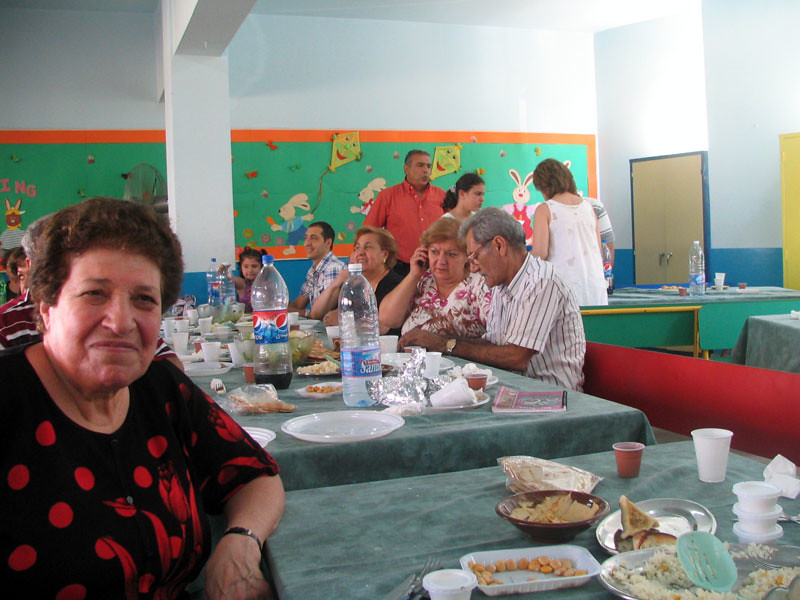
On Sunday, June 12 - the banquet of the Armenian Evangelical Emmanuel Church took place in the kingdergarten hall of the Armenian Evangelical Torosian Intermediate School. Mr. Mano Chilingirian was emcee. After welcoming everyone, the pastor prayed for the food and the gathering.
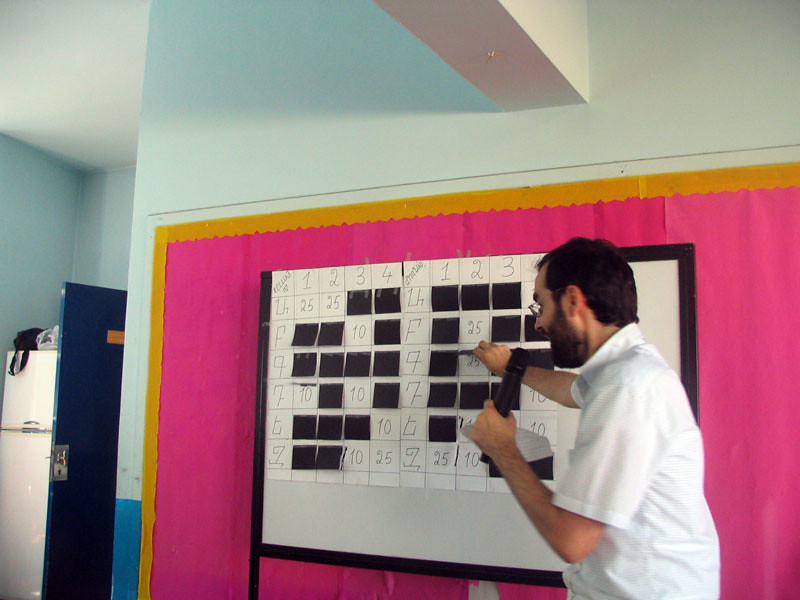
Several people had input in the program: Ms. Maral Khoshafian played on the piano, Mr. Garoudj Aroyan recited a poem, Mr. Sam Demirjian led the riddle games, Mr. Mano Chilingirian led the "Don't Forget" game. A word of thanks goes to the Khnamagal Marmin, the ladies who prepared the food, and those who contributed their gifts to the "Lo". There were 101 guests.


Photos courtesy of Nazani Svajian

Rev. Hovhannes Svajian Preaching in the Mrouj Church

On Sunday, July 10 - the first worship service, for the summer of year 2011, was held in Mrouj Church. Rev. Hovhannes Svajian, pastor of the Armenian Evangelical Church gave the sermon, Ms. Ani Baboghlanian, a member of Elders' Committee of the Emmanuel Church, led the worship, and Mrs. Vera Svajian, the pastor's wife, played the piano. After the service, the church had fellowship and reception.


Evangelist Luis Palau Preaches to Crowd in Marseille, France

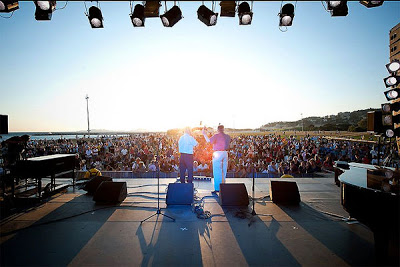
Argentinian-born evangelist Luis Palau preached in the southeast coastal city of Marseille, France on Saturday, concluding his three-day Christian outreach festival.


(Photo: Luis Palau Evangelistic Association)
Evangelist Luis Palau preaches in Marseille, France on Friday, June 1, 2011.

The Luis Palau festival in Marseille was unique in that on Saturday the message was picked up by a satellite channel with millions of viewers. Palau spoke in Spanish while his interpreter translated his message into French.

Every night the festival, which began June 30, was taped for delayed transmission to Francophone Africa, the Middle East on CAN, and France on Dieu TV. Standing on the beaches of Plage du Prado, Palau preached about the Good News found in Jesus Christ.

The Luis Palau festival is the first event of its kind to be sponsored by the city of Marseille. Like other Palau fest, there were children’s activities, concert-like music, soccer, and preaching.

“We’re so used to having evangelical events and opportunities in [the United States], that we just take it for granted. We’re on the radio, we’re on the TV, in print, and all the things that we normally do which you really can’t do in France,” said Colin James of the Luis Palau Evangelistic Association to MNN.

“The opportunities are very limited and constrained because of the culture and just the way the country has been run. It’s not an evangelical-based country.”

According to the CIA World Factbook, less than 2 percent of France’s population is Protestant Christian.

“Please pray that God will continue to pour our His Spirit in Marseille. Pray that the believers, especially the new ones as a result of this festival, will experience a radical transformation in their lives and live totally for Christ,” read the latest posting for the Marseille festival on the Luis Palau Evangelistic Association website.

iPads replacing note pads as Asian schools go high-tech

Agence France Press


This photo taken on May 18, 2011, shows Singapore students using the iPad in a language arts class in Nanyang Girls' High School. (AFP)

Read more: http://www.dailystar.com.lb/Technology/International/2011/Jun-05/iPads-replacing-note-pads-as-Asian-schools-go-high-tech.ashx#ixzz1OUr0T98W
(The Daily Star :: Lebanon News :: http://www.dailystar.com.lb)


SINGAPORE: Apple’s iPad and other tablet computers are replacing traditional note pads in some Asian schools and making the lives of thousands of students a lot easier.

Soon pupils could be reading on their tablets about a quaint old communication device called “paper,” especially in Asia’s advanced economies where many schools are racing toward a paperless classroom.

The slim glass slabs slip easily into a bag and can store thousands of textbooks, making a fat school bag full of heavy books, pens and notepads a thing of the past.

“I like the iPad because it is portable and we do not have to carry so many bags and files around,” said 13-year-old Nicole Ong, who now makes notes on her iPad during class at Nanyang Girls’ High School in Singapore.

A sample group of more than 120 students and 16 teachers at the school have been given iPads, at a cost of over $100,000. By 2013, every student in the school will have one.

The number of software applications – or apps – that can be used for educational purposes on tablet computers is set to explode.

It’s a brand new business that even media mogul Rupert Murdoch has identified as an area of huge potential growth.

Murdoch said his News Corp group is to push into the education technology market in a speech to the e-G8 conference of Internet entrepreneurs and European policymakers in Paris last month.

He described education as the “last holdout from the digital revolution” and outlined a vision for personalized learning with lessons delivered by the world’s best teachers to thousands of students via the Internet.

“Today’s classroom looks almost exactly the same as it did in the Victorian age,” Murdoch added.

But many Asian schools are already way ahead of the game.

“No longer is language learning solely based on the teacher commenting on students’ works – classmates can feedback on one another,” said Seah Hui Yong, curriculum dean of Nanyang.

Rene Yeo, head of the information technology department at Tampines Secondary School, also in Singapore, teaches science with his iPad. His students learn factorization by simply moving the numbers around on the screen.

They also read about animal cells and the human brain structure by clicking on the various parts. And tablet computers make the double helix structure of a human DNA practically come to life before a student’s eyes.

There are apps to learn English and maths, pupils can do cause and effect analysis on iBrainstorm, prepare for oral exams and speeches with AudioNote and even strum the guitar for a music lesson on GarageBand.

The rise of classroom technology will mirror its rise throughout society, says Sam Han, a US-based expert on the role of technology in education.

Han, instructional technology fellow at the Macaulay Honors College, City University of New York, said he expects some Asian countries to leapfrog the West.

“While the Internet was birthed in the US, Singapore and South Korea [for example) boast far greater broadband Internet access penetration and infrastructure than the US,” he said.

Japan’s communications ministry has given tablets to more than 3,000 under-12 pupils at 10 elementary schools and even fitted classrooms with interactive electronic blackboards under the so-called “future school” pilot project.

In South Korea, where schools have WiFi zones, the education ministry has been testing “digital textbooks” in some schools since 2007. In 2012, the ministry says it will decide whether to supply tablets to schools nationwide.

Singapore has a hugely competitive education system known for its high level of science and mathematics instruction. The education ministry provides a grant for schools to buy this kind of equipment, as well as software and services.

Many schools already have WiFi, making it easy for students to connect to the Internet.

But some teachers acknowledged there are students who get distracted by playing games or surfing Facebook and other social media sites like Twitter.

Education psychologist Qiu Lin cautioned against schools getting carried away and promoting the blind use of technological devices, and neglecting the real goals of education.

“The trend of integrating technology into education will definitely increase,” said the assistant professor at Nanyang Technological University, which is separate from the high school.

“But after one month when the novelty of iPads wears down, a good curriculum and teaching materials that can increase deep thinking and problem solving in students need to be in place.”

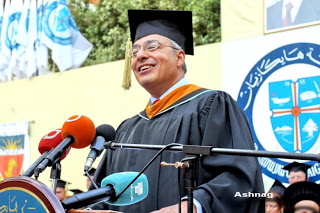
Haigazian University’s 51st Commencement Exercises

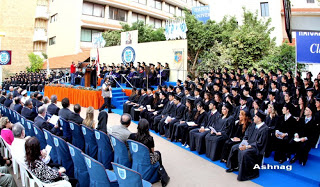
On Friday, July 1st 2011, Haigazian University proudly graduated 150 students in the First Armenian Evangelical Church courtyard in Beirut.
The ceremony honored 150 students from the faculties of Business Administration and Economics, Humanities, Sciences and Social and Behavioral Sciences with the BA and BS degrees, including 14 students with the Masters degrees in the faculties of Business Administration and Economics and Social and Behavioral Sciences.
Government Minister Panos Manjian represented the President of the Republic, the President of the Council of Ministers and the Speaker of the Parliament. Among the attendees were MP Jean Oghasabian, representing former Prime Minister Saad Hariri, MPs. Dr. Basssem Shabb, Serge Toursarkissian, Sebouh Kalpakian, Armenian Ambassador Ashod Kotcharian, US Public Affairs Officer Ryan Gliha, The USAID Director, Dr. Jim Barnhart, in addition to representatives of the Commander of the Army and the chief of Internal Security, the President of the Supreme Council of the Evangelical Community in Syria and Lebanon, Rev. Salim Sahyouni, Archbishop Kegham Khatcherian, former ministers and MPs, diplomats, clergy, members of the Board of Trustees, parents, relatives and friends, all in all more than 1,100 guests.
The ceremony started as the Faculty and Graduates marched through the crowd of parents, relatives and friends to the celebratory processional march “Pomp and Circumstance” by Sir Edward Elgar, followed by the Lebanese National Anthem, and the Invocation by the Campus Minister, Rev. W. Gregory Lee-Parker.
The university President Rev. Dr. Paul Haidostian focused his word on the need to find stability and balance in the hectic world we live in. Haidostian noted that this was an important message of the university, as Haigazian University “has directly and indirectly taught that balance is a value we should cherish… It is a critical need of life for good judgment and good quality, and it gives both a deep and a wide perspective in life” Haidostian concluded by saying “balance in ones views requires a standpoint, but a standpoint is not only a point. It is a point which helps you stand: today, alone, with others, and tomorrow, in all circumstances.”
The keynote speaker of the ceremony, Michel Goguikian, a successful International Banker and financier of Lebanese - Armenian origins, as well as an avid philanthropist, founder of the Goguikian Foundation, spoke to the Haigazian graduates about his life experiences in South America.
Sharing the important elements that enabled him to succeed, Goguikian stressed the importance of expecting and preparing for adversity and learning to work through it. Moreover, he underscored “the invaluable role of passion” and finding it in all that one does.
Goguikian, who is actively involved in a number of charitable foundations that particularly support higher education, also addressed the importance of giving back to society. “As graduates of one of Lebanon's most prestigious universities, you should not forget your responsibility toward society and moral obligations toward your country,” he concluded.
Following the keynote address, Registrar Anahid Fermanian and Deans Fadi Asrawi and Arda Ekmekji presented the graduates who received their degrees from President Haidostian.
In her valedictorian address In English, Dima Matta, speaking in English, hailed Haigazian as “a refuge, a haven of scholarship and a shelter of fellowship and camaraderie.” She spoke of the challenge to overcome all obstacles through Haigazian’s motto of “truth, freedom and service.” Rather than settling for “a tomorrow filled with ashes,” Matta urged her fellow graduates to actively “dus
t” the ashes off.
Valedictorian Garo Keurkunian addressed his fellow graduates in Arabic, reflecting on the gifts that Haigazian had given him and all other graduates in preparing them for the life ahead. He expressed his gratitude to Haigazian for providing its students with a most rewarding and well-rounded education, as well as preparing them for the challenges of professional life. Keurkunian concluded with a promise to his country Lebanon, to be faithful and grateful no matter the distances that may separate them.
After singing the Alma Mater, the ceremony ended with the Benediction given by the President of the Union of the Armenian Evangelical Churches in The Near East, Rev. Megrdich Karagoezian.
The class of 2011 threw their caps high into the air as blue and orange balloons flew overhead. The graduates then walked proudly out with the recessional “Trumpet Tune” by Henry
Purcell, eager to move to the Mugar and the New Heritage Building gardens and take memorable pictures with their friends and families to commemorate this special day.

Mira Yardemian
Public Relations Director